Before You Start
This guide includes common earthworm groups in the Northeast and is not a complete list.
It supports approximate identification using visible traits.
Developed by Maryam Nouri-Aiin in collaboration with Tim McCay.
Supported by SARE grant LNE25-489.
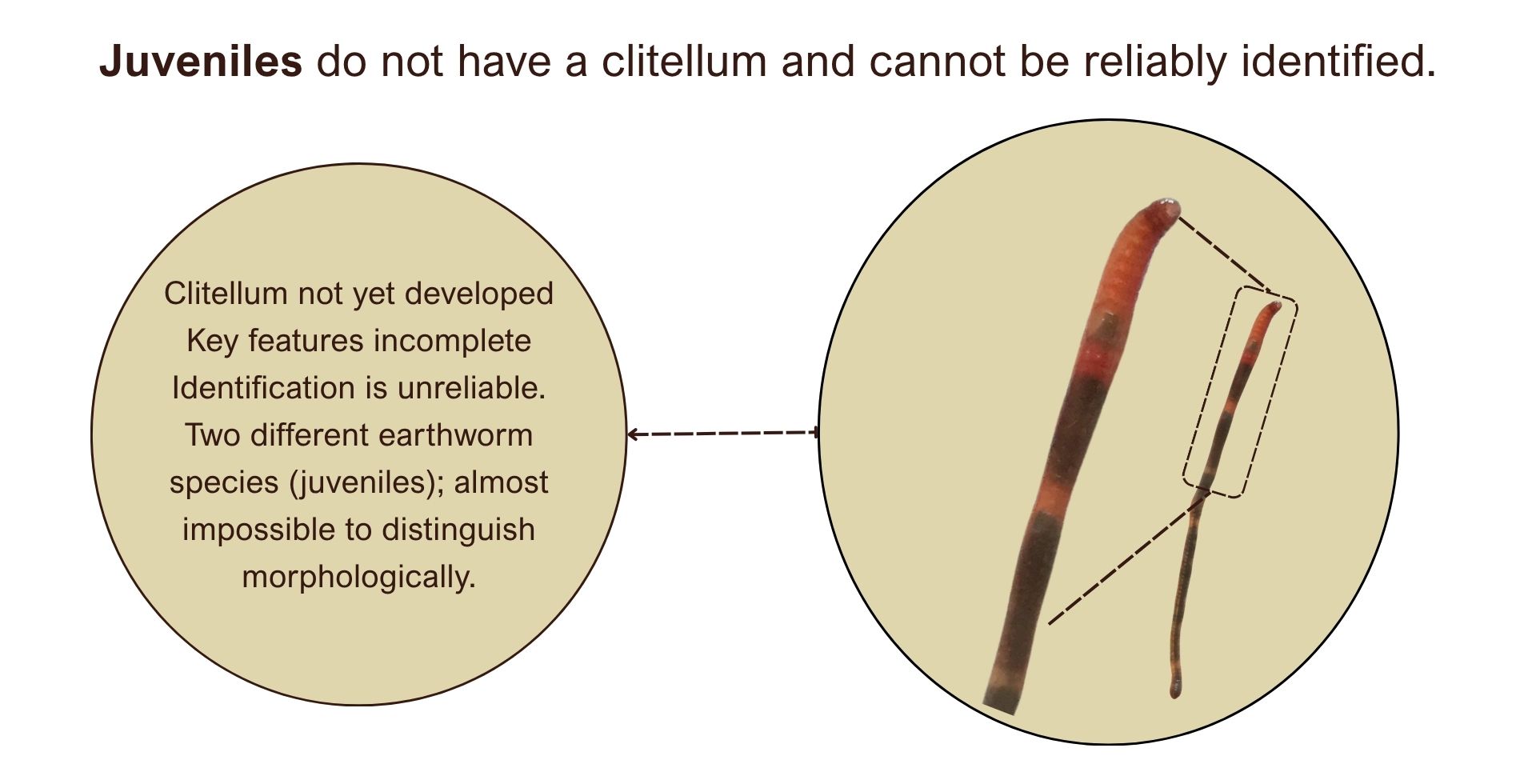
Identification relies on reproductive features. Juveniles (without a visible clitellum) are difficult to impossible to identify. Even older juveniles may show incomplete or misleading traits.
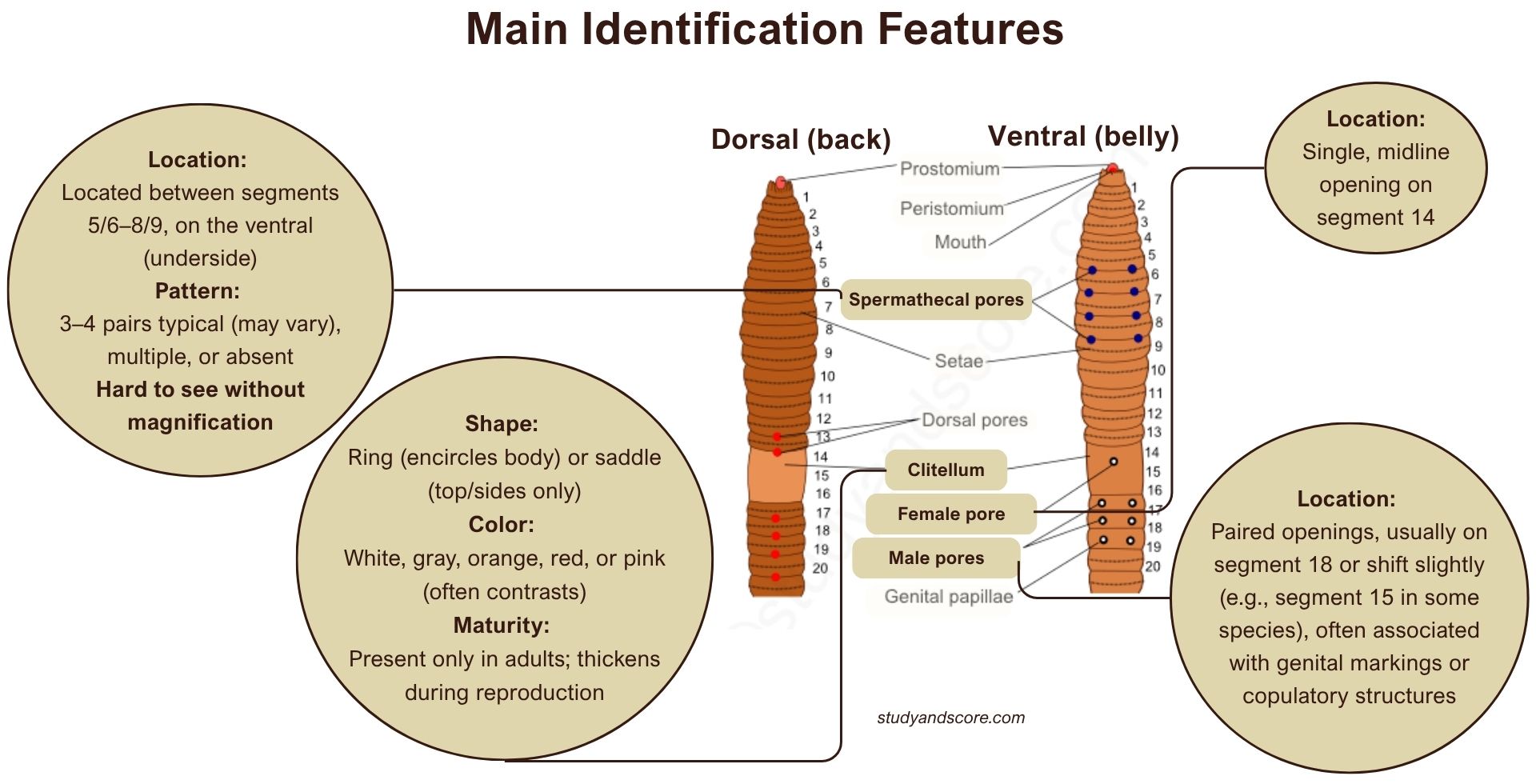
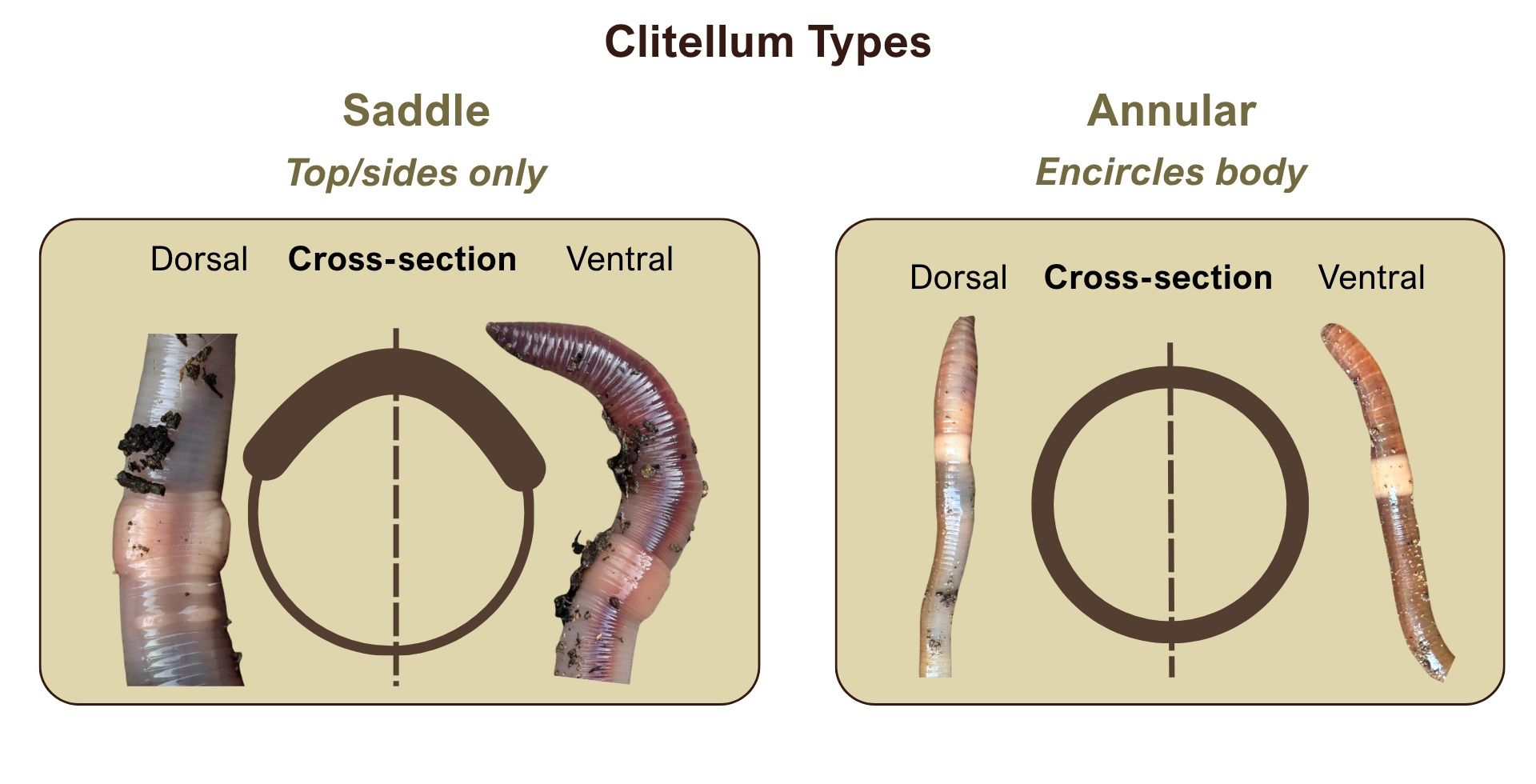
The clitellum (the band around the body) is one of the most important diagnostic features. Its shape, position, and texture help distinguish major groups.
Diagnostic features may differ within species. In Amynthas, pore number and markings are often variable or difficult to observe in the field.
Even with multiple traits, species-level identification may be uncertain without magnification. This key is intended to narrow possibilities, not provide definitive identification.
Combine size, color, clitellum type, habitat, and behavior for more reliable identification.
Click a section below if you’re unsure about key features.
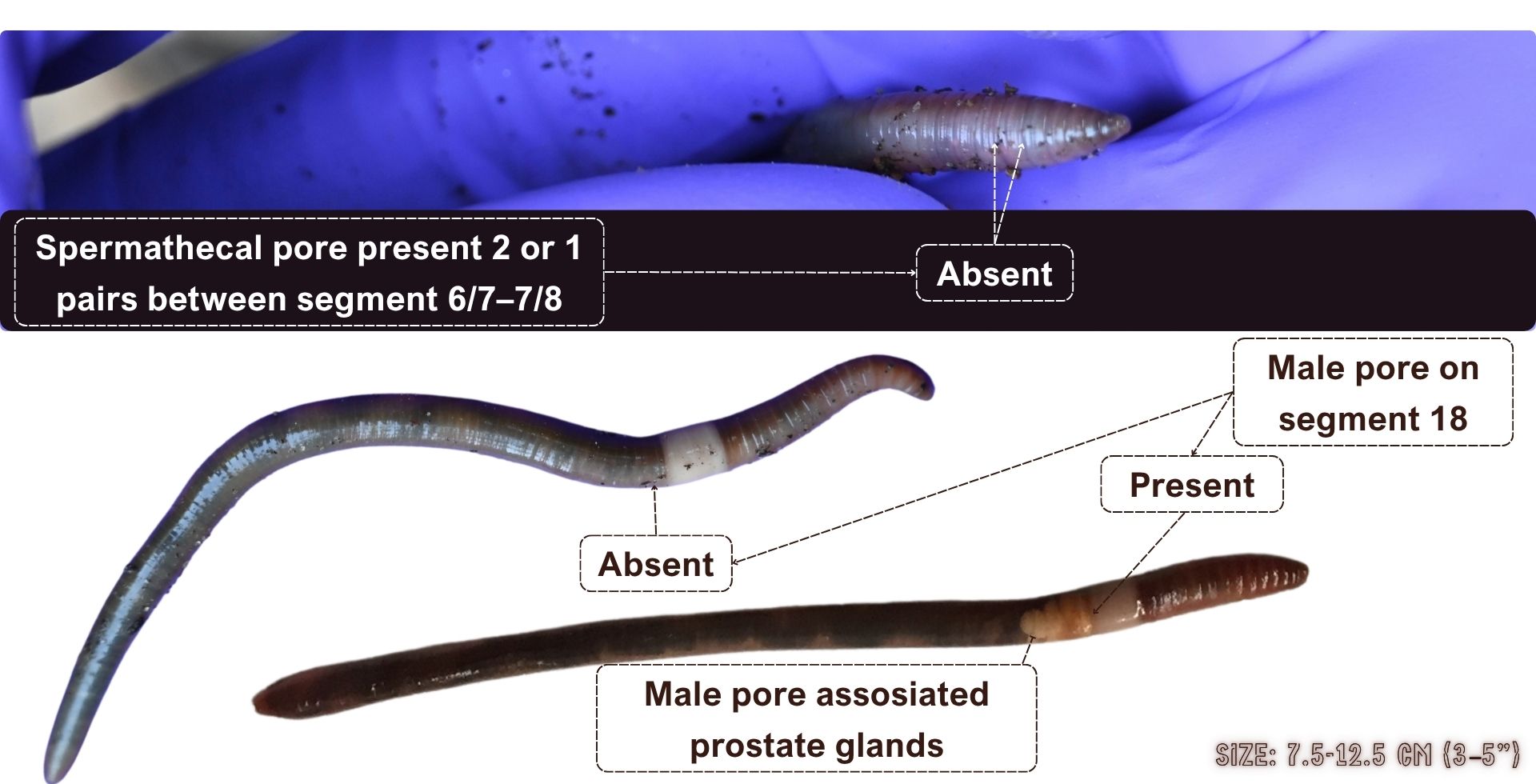
Amynthas tokioensis
Smooth white clitellum + metallic sheen + paired spermathecal pores
Body size: 7.5–12.5 cm (3–5")
Color: Dark grey to brown with iridescent metallic sheen
Clitellum: Smooth, flat, milky-white, flush with body
Spermathecal pores: If present 1 or 2 pairs (segments 6/7–7/8)
Genital markings: Small circular, usually paired near pores
Male pores: Present on segment 18 or absent
Habitat: Surface soil (epi-endogeic), disturbed soils
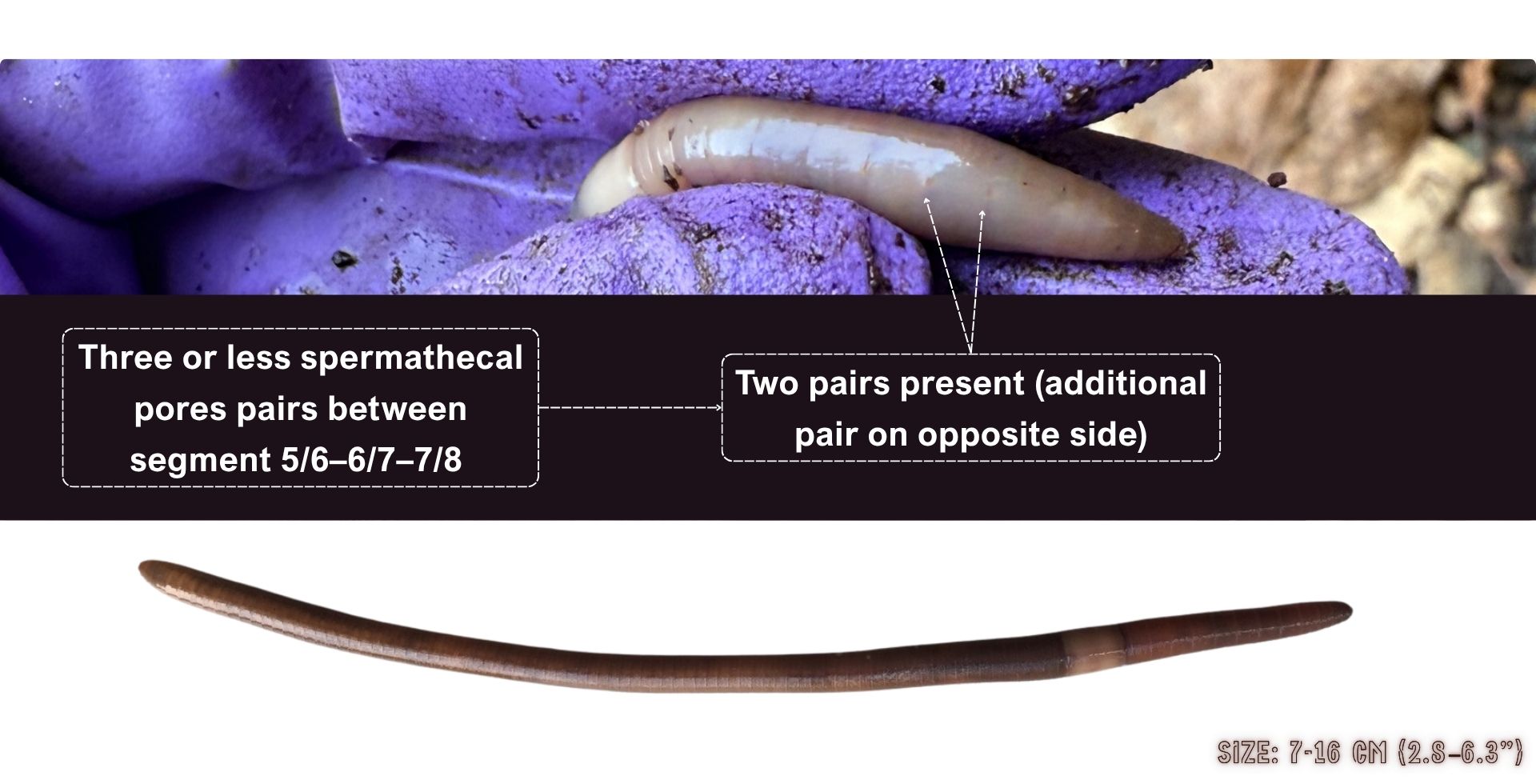
Amynthas agrestis
Smooth white clitellum + usually 3 spermathecal pores pairs
Body size: 7–16 cm (2.8–6.3")
Color: Dark grey/brown with metallic sheen
Clitellum: Smooth, milky-white, flush
Spermathecal pores: Usually 3 pairs or less (5/6–6/7–7/8)
Genital markings: Often faint or wrinkled patches (segments 7/8)
Male pores: Usually absent
Habitat: Surface soil (epi-endogeic), disturbed soils
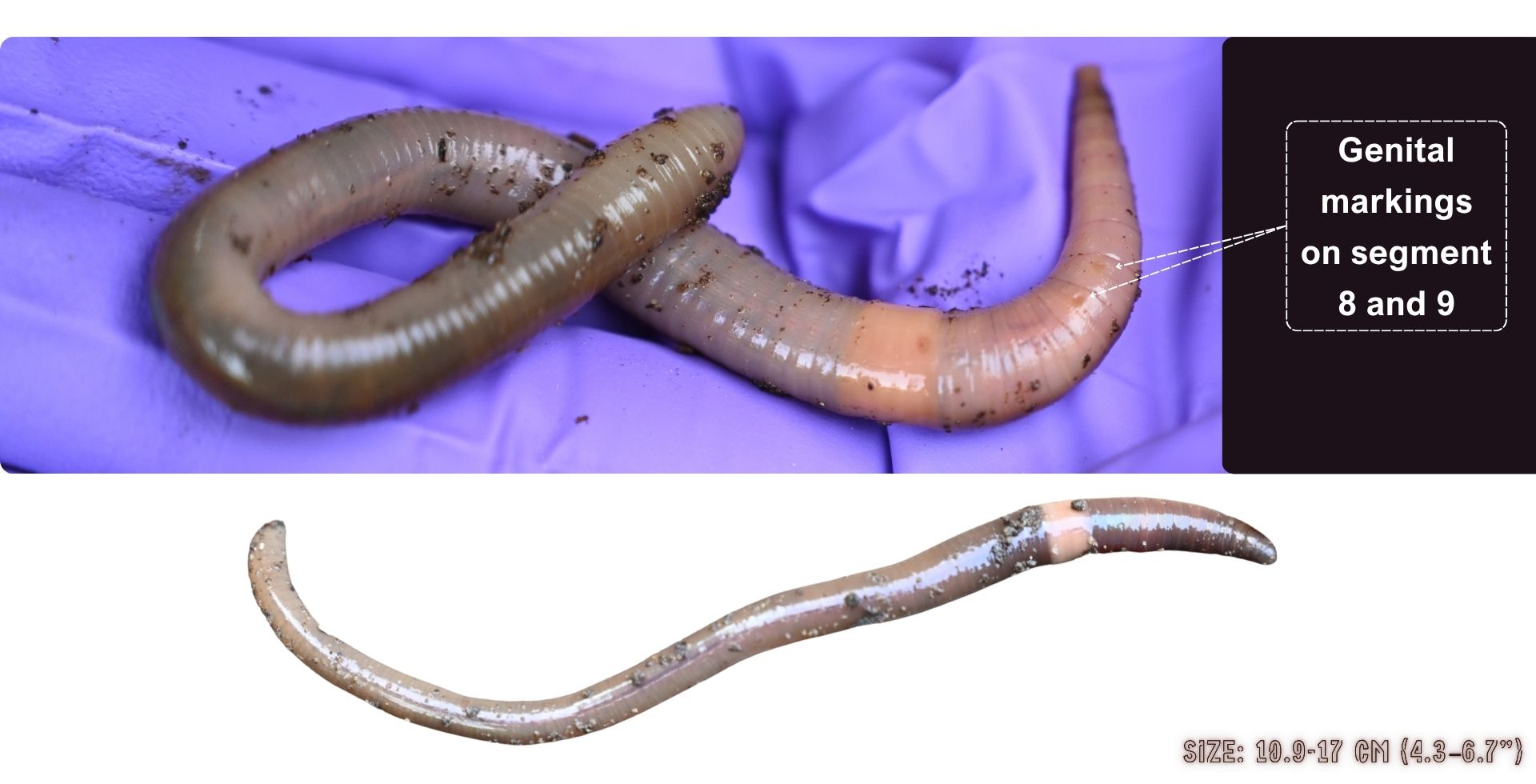
Metaphire hilgendorfi
Smooth clitellum + midline genital markings
Body size: 10.9–17 cm (4.3–6.7")
Color: Dark grey/brown with metallic sheen
Clitellum: Smooth, pale, flush
Spermathecal pores: 2 pairs (6/7–7/8)
Genital markings: Clusters of small bumps (tubercles) along midline
Male pores: Usually absent
Habitat: Surface soil (epi-endogeic), disturbed soils
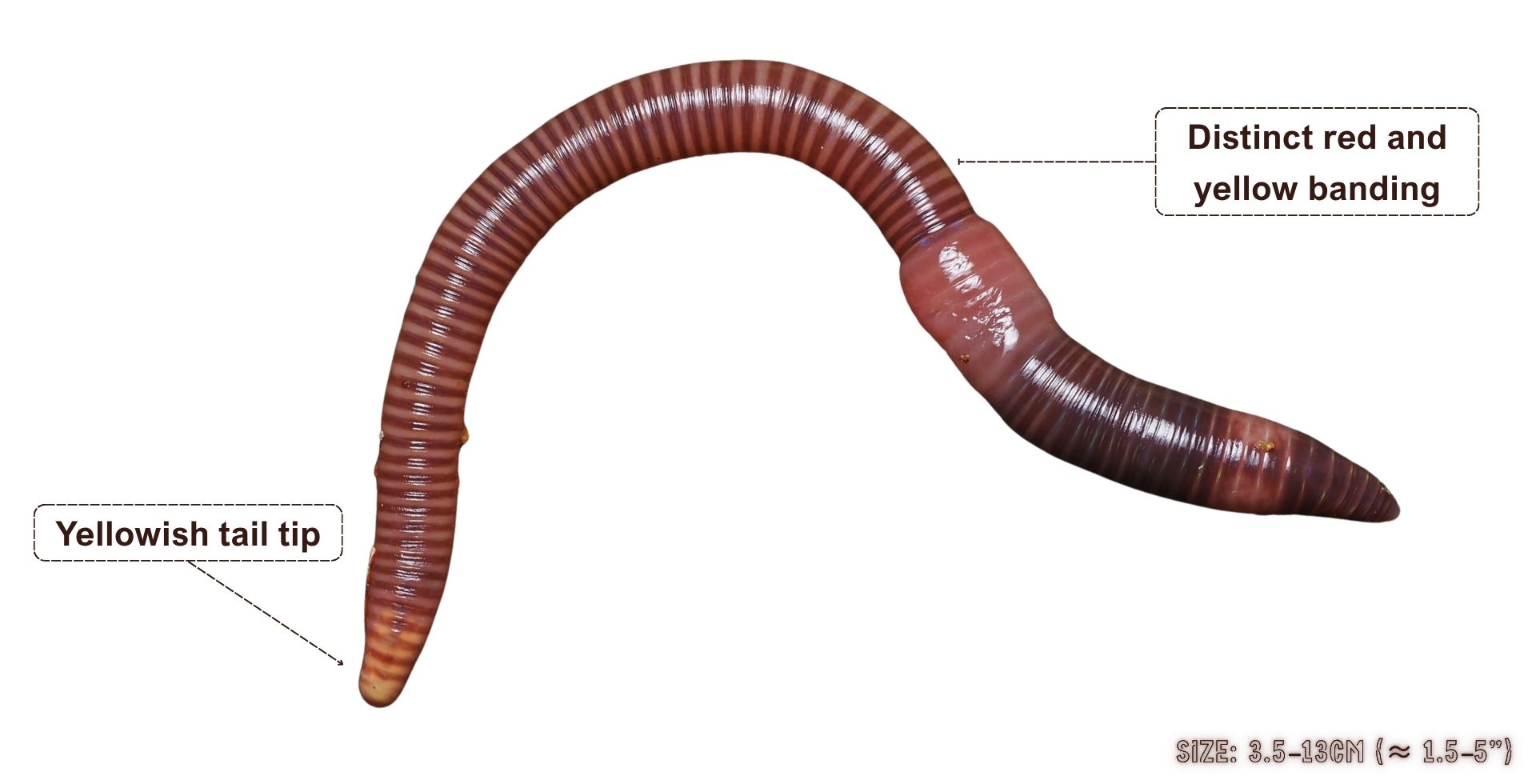
Eisenia fetida (Tiger worm)
Strong red/yellow striping + yellow tail tip
Body size: 3.5–13 cm (1.5–5")
Color: Alternating dark red and yellowish bands
Clitellum: Raised, saddle-shaped
Male pores: Present but not diagnostic in field
Habitat: Compost, manure, organic waste, surface layers (epigeic), rarely found deep in mineral soil
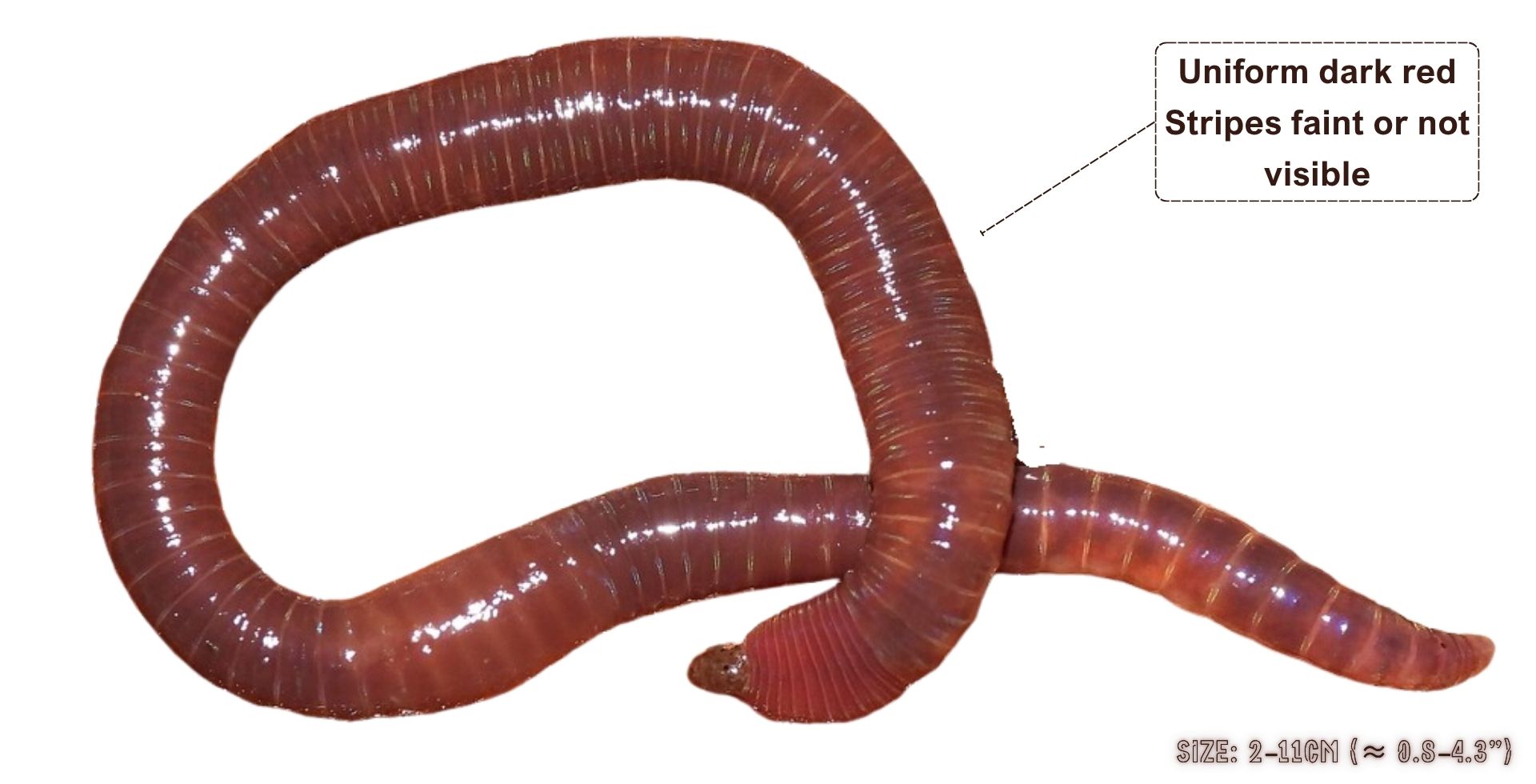
Eisenia andrei (Red tiger worm)
Uniform dark red + no yellow tail
Body size: 2–11 cm (0.8–4.3")
Color: Dark red, striping faint or absent
Clitellum: Raised
Male pores: Not field diagnostic
Habitat: Compost, manure, organic-rich, surface layers (epigeic), rarely found deep in mineral soil
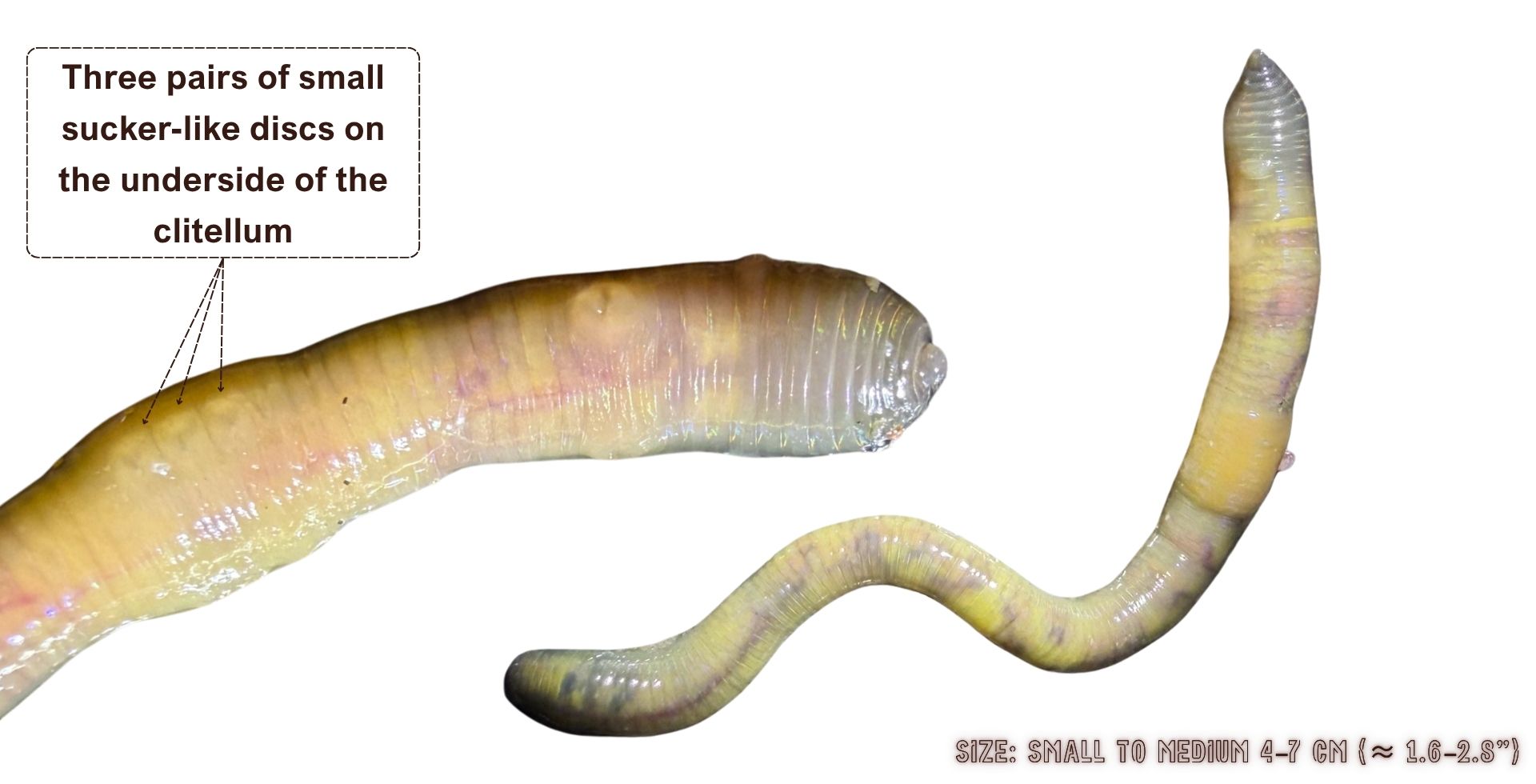
Allolobophora chlorotica (Green worm)
Green body + underside sucker-like discs
Body size: 4–7 cm (1.6–2.8")
Color: Green (common) or pale pink morphs
Clitellum: Raised
Special feature: Three pairs of sucker-like discs under clitellum
Male pores: Present
Habitat: Wet soils, gardens, riverbanks, clay soils, often remains below surface (endogeic)
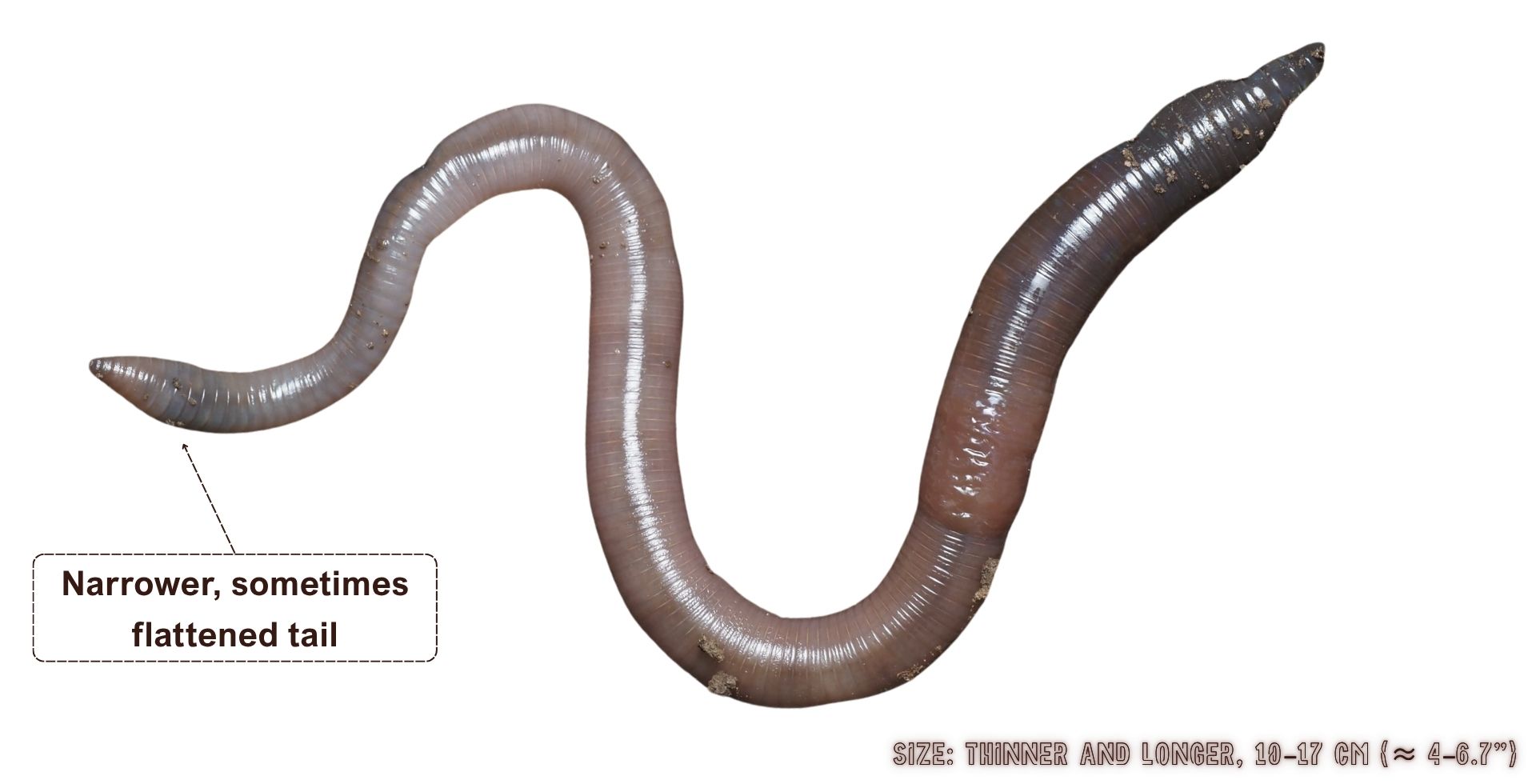
Aporrectodea longa (Black-headed worm)
Long, thin + dark head + deep burrower
Body size: 10–17 cm (4–6.7")
Color: Dark head, pale grey/brown body
Shape: Slender, elongated
Male pores: Visible, large
Habitat: Deep vertical burrows (anecic)
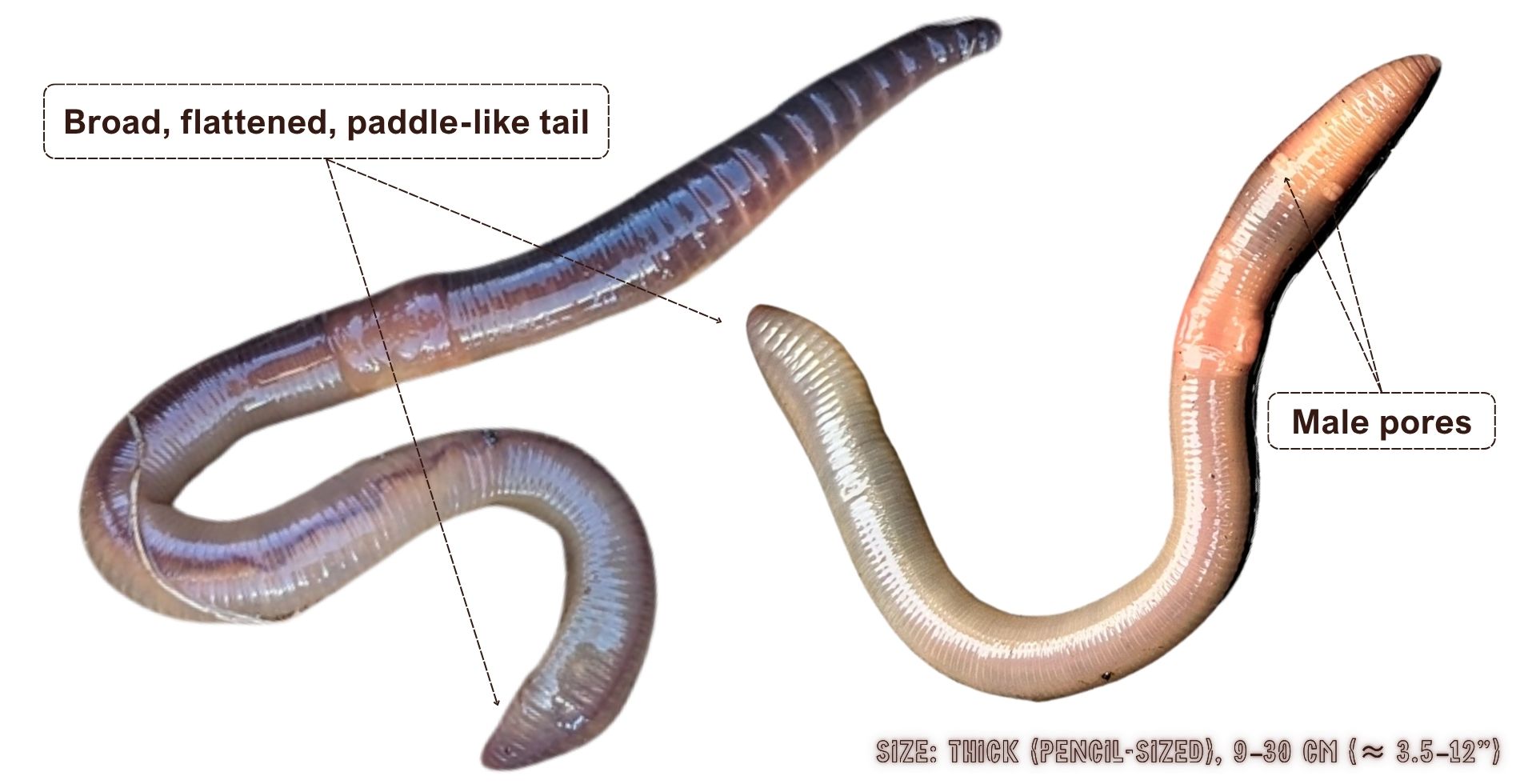
Lumbricus terrestris (Nightcrawler)
Large, thick + paddle tail + deep burrow
Body size: 9–30 cm (3.5–12")
Color: Strong gradient (dark head → pale tail)
Shape: Thick, cylindrical (pencil-sized)
Tail: Broad, flattened (paddle-like)
Male pores: Visible, large
Habitat: Deep vertical burrows (anecic), pulls organic matter into burrows
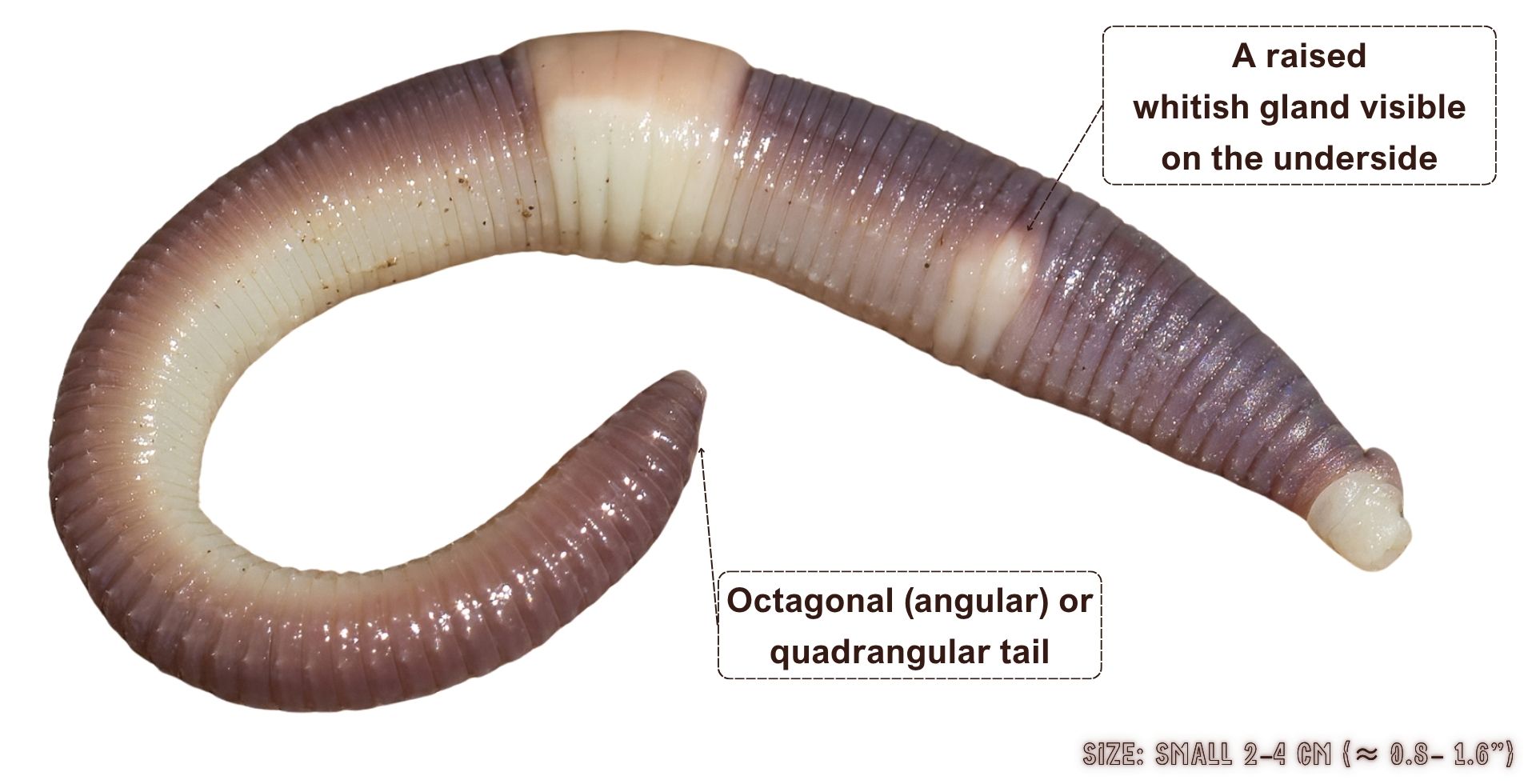
Dendrobaena octaedra (Octagonal-tail worm)
Small + angular tail + cold tolerant
Body size: 2–4 cm (0.8–1.6")
Color: Reddish-violet to dark red
Tail: Angular (octagonal/quadrangular)
Special Feature: A raised whitish gland visible on the underside between the saddle and the head
Male pores: Visible, small
Habitat: Leaf litter (epigeic), moss, under logs, highly cold-tolerant, common in forest litter layers
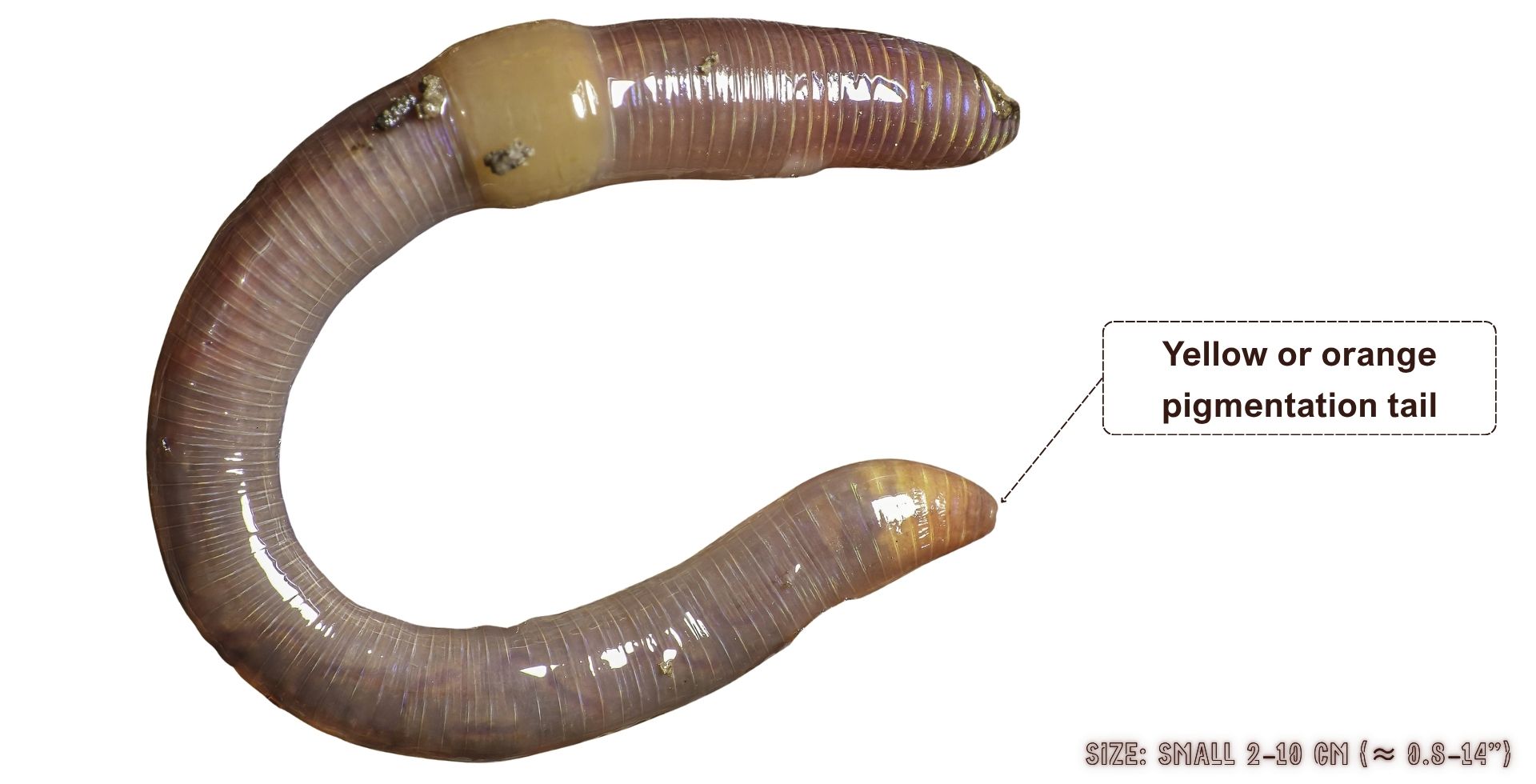
Dendrodrilus rubidus (Gilt-tail worm)
Other name: Bimastos rubidus
Small + yellow/orange tail
Body size: 2–10 cm (0.8–4")
Color: Reddish-violet to dark red
Tail: Yellow or orange pigmented
Male pores: Visible, small
Habitat: litter-dwelling species (epigeic), organic-rich soils, decaying wood, moss, highly cold-tolerant
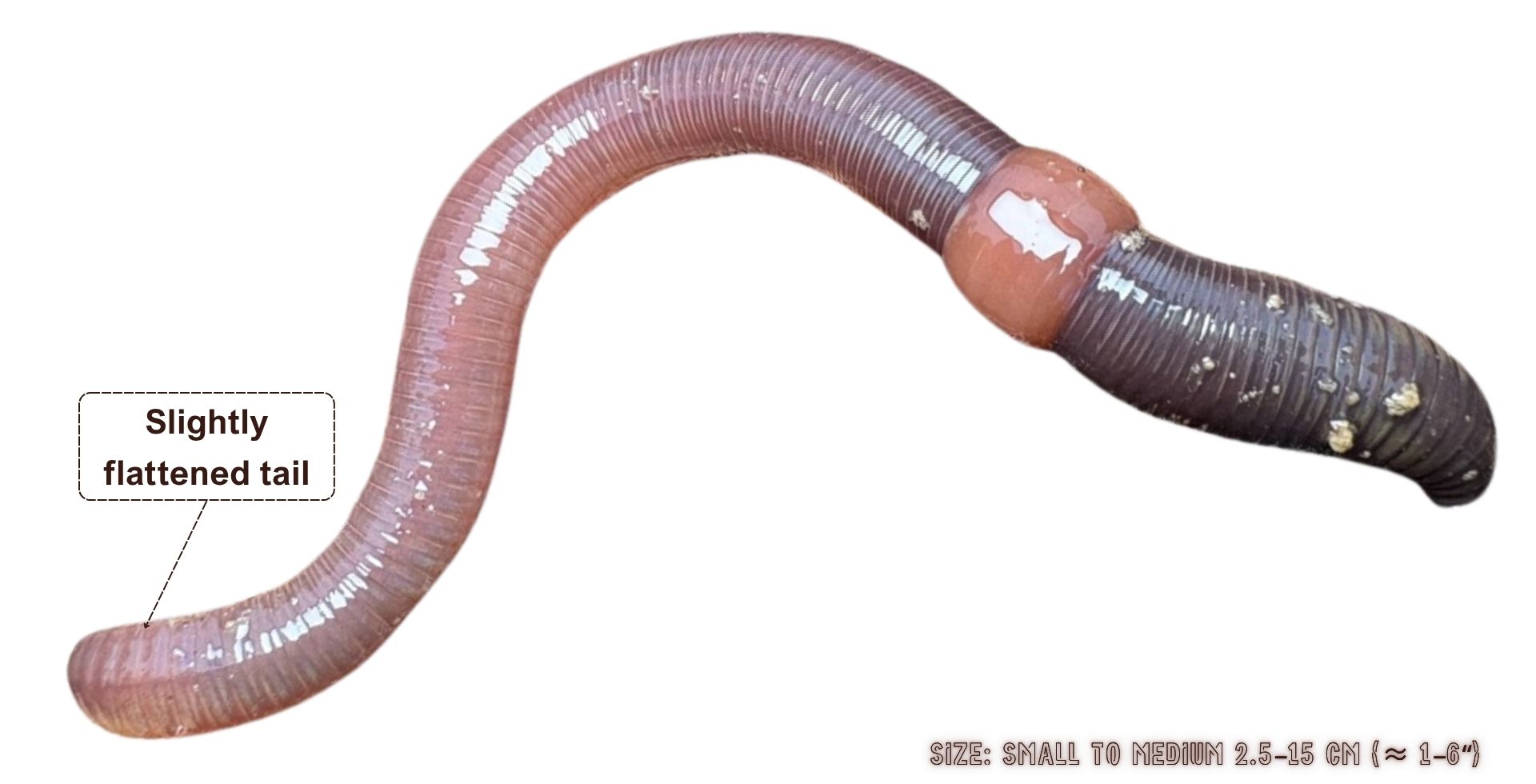
Lumbricus rubellus (Red earthworm)
Red head fading to pale tail
Body size: 2.5–15 cm (1–6")
Color: Red anterior fading toward lighter posterior
Tail: Slightly flattened
Male pores: Not visible
Habitat: Litter (epigeic), compost, under logs, common surface-dwelling species in disturbed soils
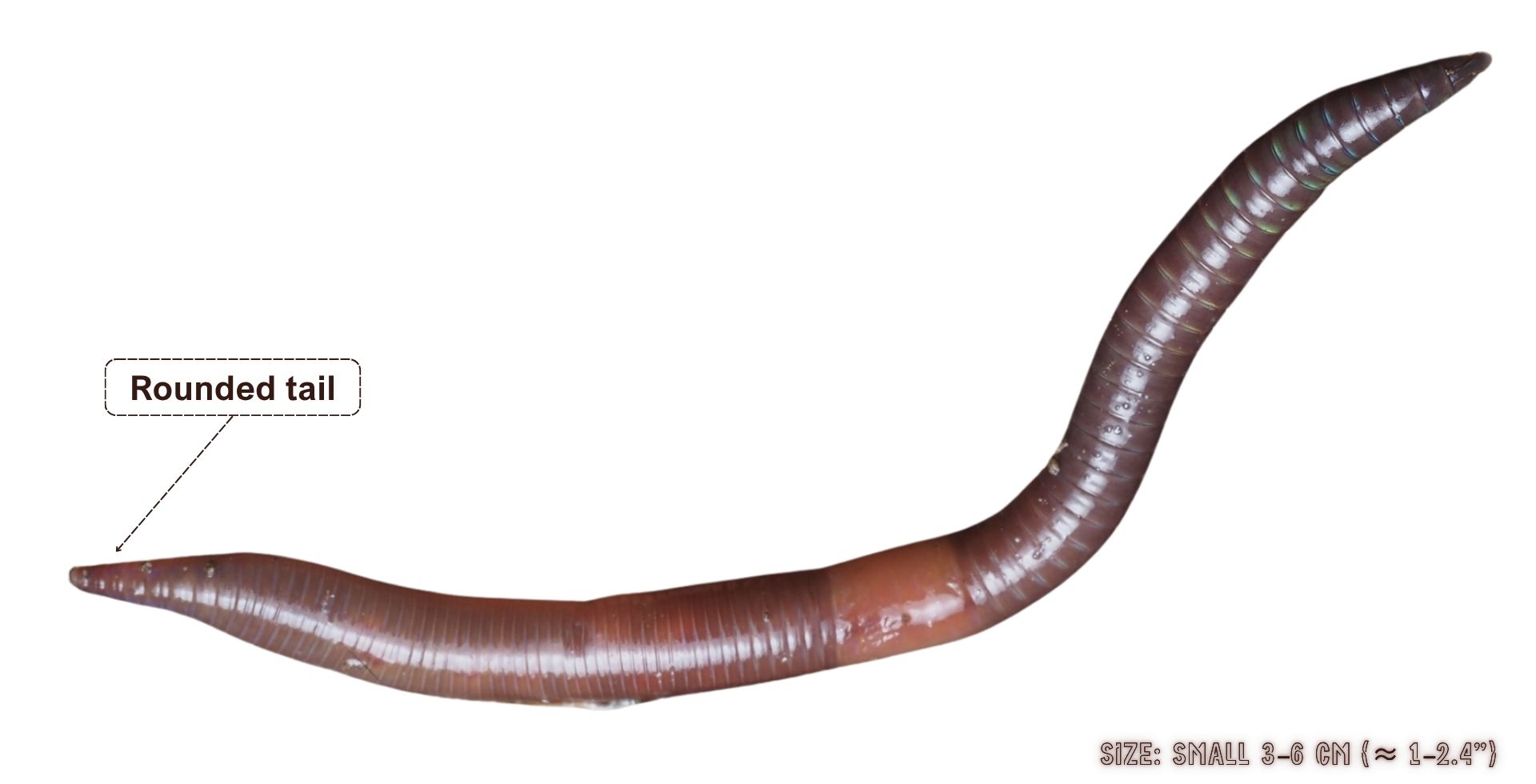
Lumbricus castaneus (Chestnut worm)
Small + uniform chestnut color
Body size: 3–6 cm (1–2.4")
Color: Uniform chestnut to purple-brown
Tail: Rounded
Male pores: Not visible
Habitat: Litter (epigeic), compost, under logs
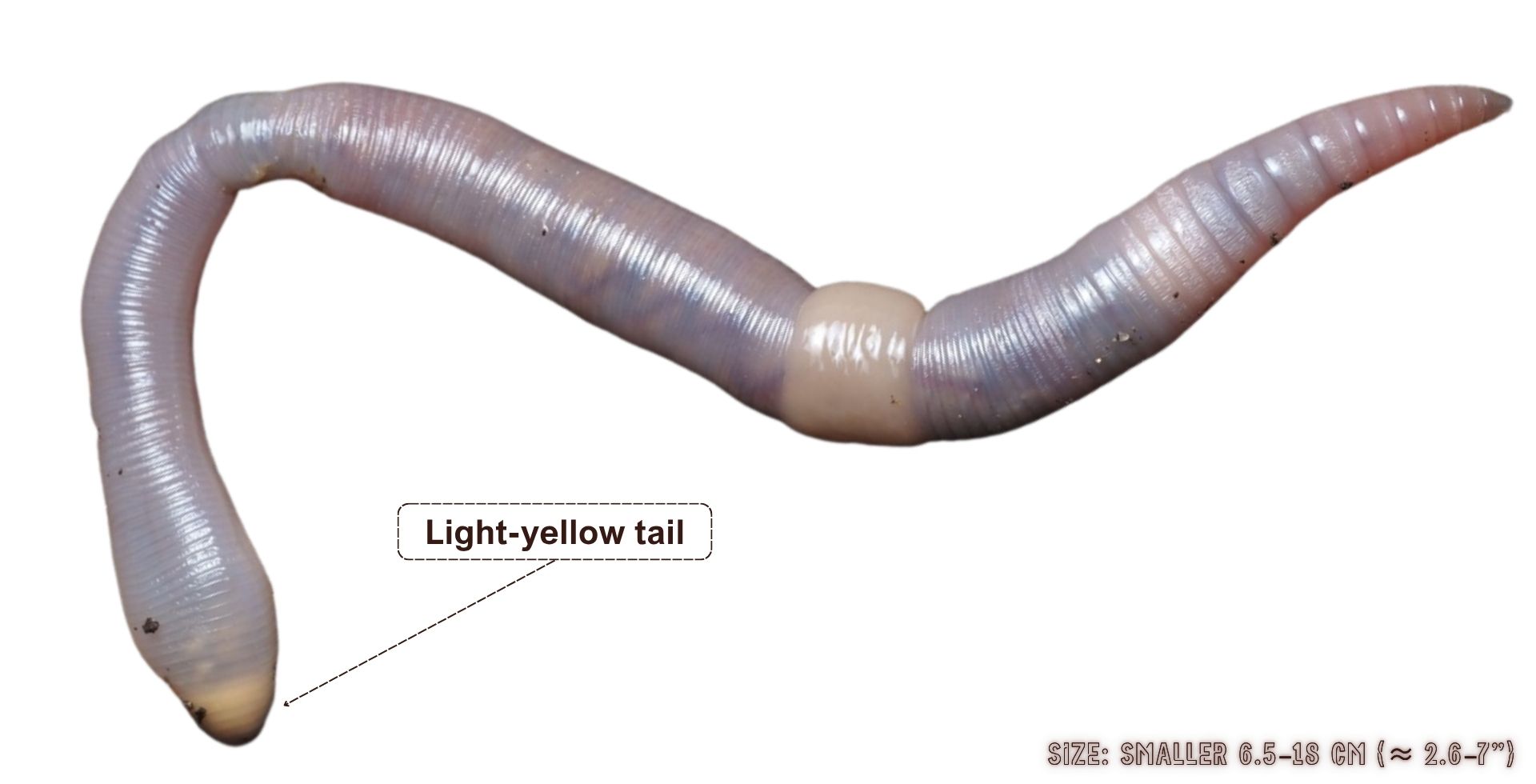
Octolasion cyaneum (Woodland blue worm)
Blue-grey body + yellow tail
Body size: 6.5–18 cm (2.6–7")
Color: Blue-grey
Tail: Pale yellow
Clitellum: Light-colored, distinct
Habitat: Moist soil, under stones, logs, near streams (epi-endogeic), often in woodland or moist environments
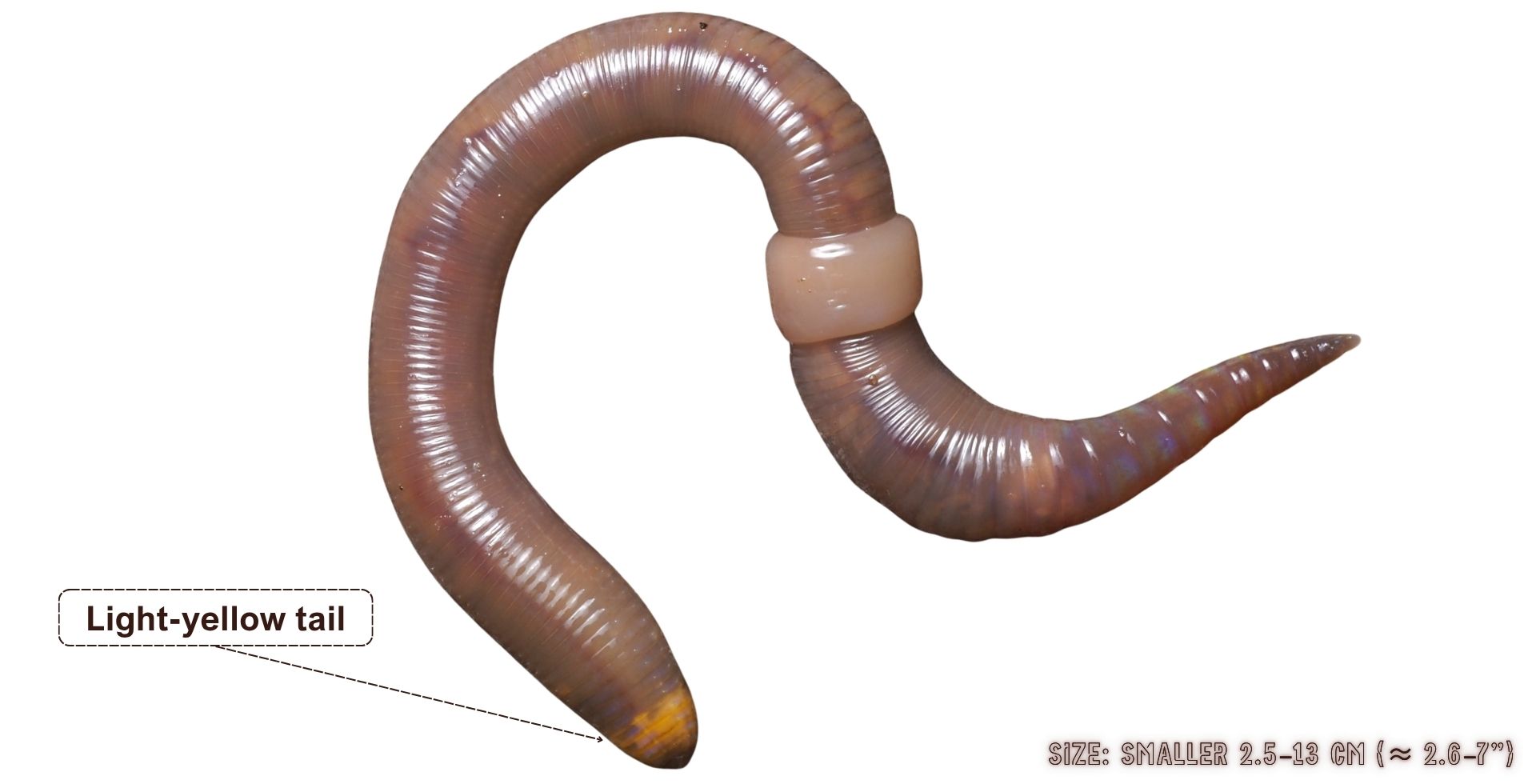
Octolasion tyrtaeum (Woodland white worm)
Pale body + yellow tail + light clitellum
Body size: 2.5–13 cm
Color: Pale whitish to grey-pink
Tail: Yellow
Clitellum: Reddish-orange to beige
Habitat: Forest soils (endogeic), gardens, debris, moist environments
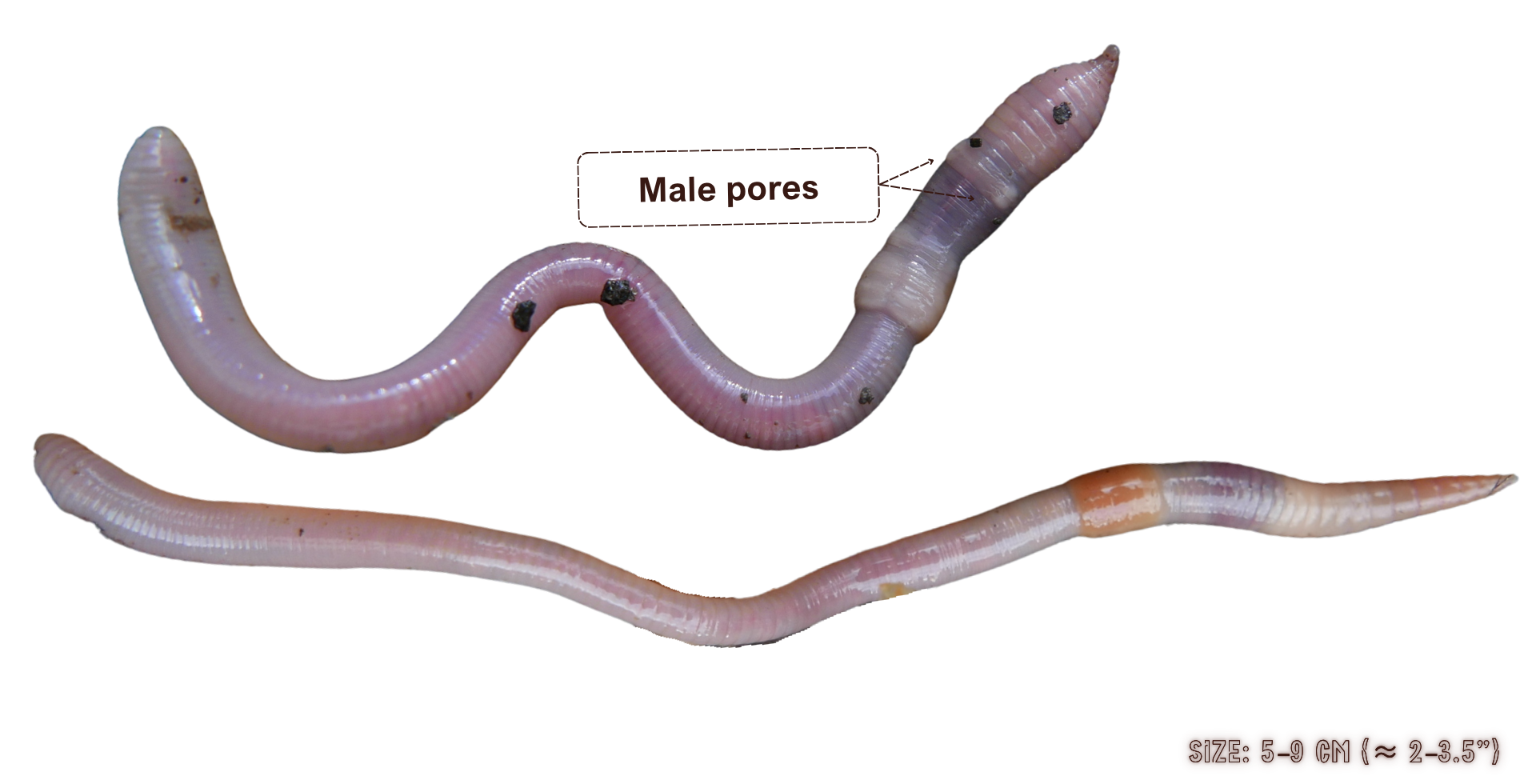
Aporrectodea caliginosa (Grey worm)
Pale grey-pink + smaller soil-dwelling worm
Body size: 5–9 cm (2–3.5")
Color: Pale grey, pink-grey, or brownish-grey; usually uniform throughout
Shape: Slender to moderately stout
Clitellum: Saddle-shaped, pale, segments 27–34
Tubercula pubertatis: Small paired pads on segments 31 and 33
Male pores: Small, but visible as a large slit or prominent, swollen bump
Habitat: Mineral soil, gardens, agricultural soils (endogeic), usually in upper soil layers
Behavior: Horizontal burrower; feeds within soil rather than pulling surface litter