Earthworm Identification Challenges
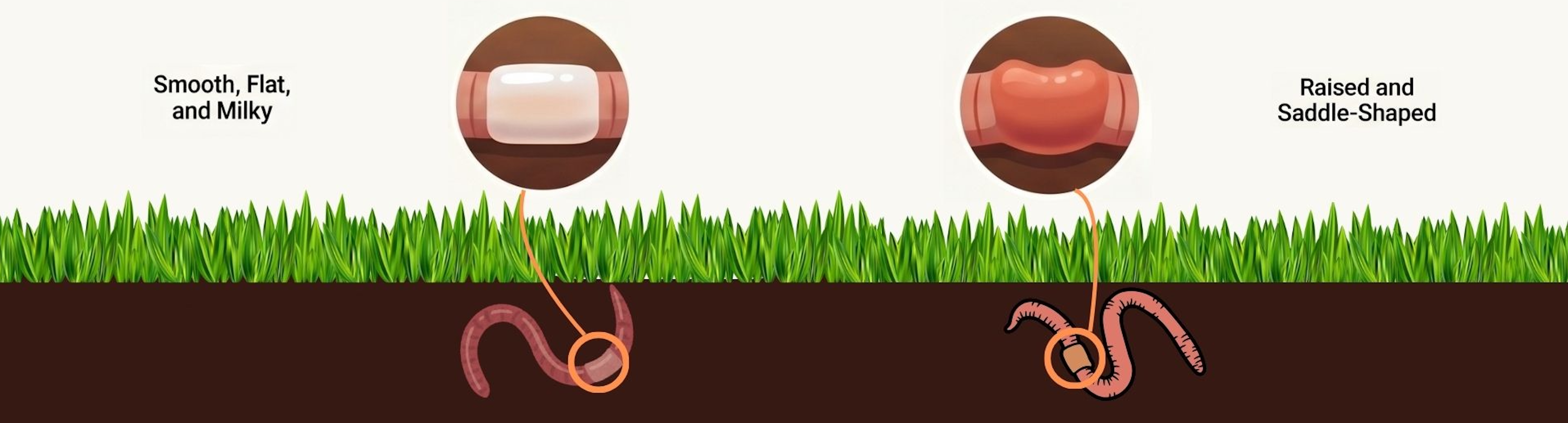
Earthworm identification is often difficult because many species lack obvious external features, juveniles are nearly impossible to identify morphologically, and cryptic lineages can look identical even when they are genetically distinct. In general, earthworm identification depends heavily on adult reproductive anatomy—especially the clitellum and genital structures—but those traits are not always visible, intact, or fully developed. The most challenging stages to identify are juveniles and cocoons, followed by adults.
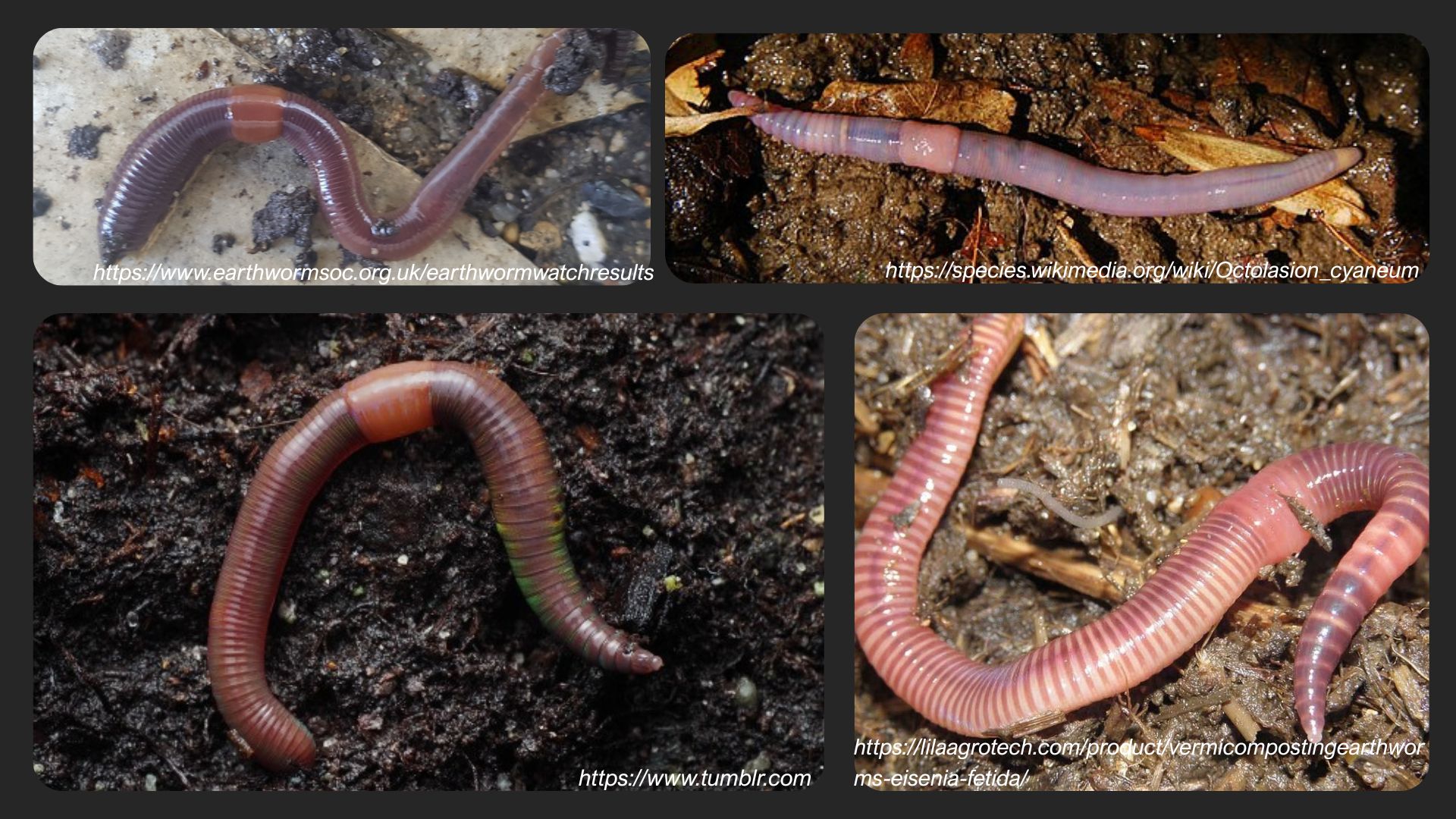
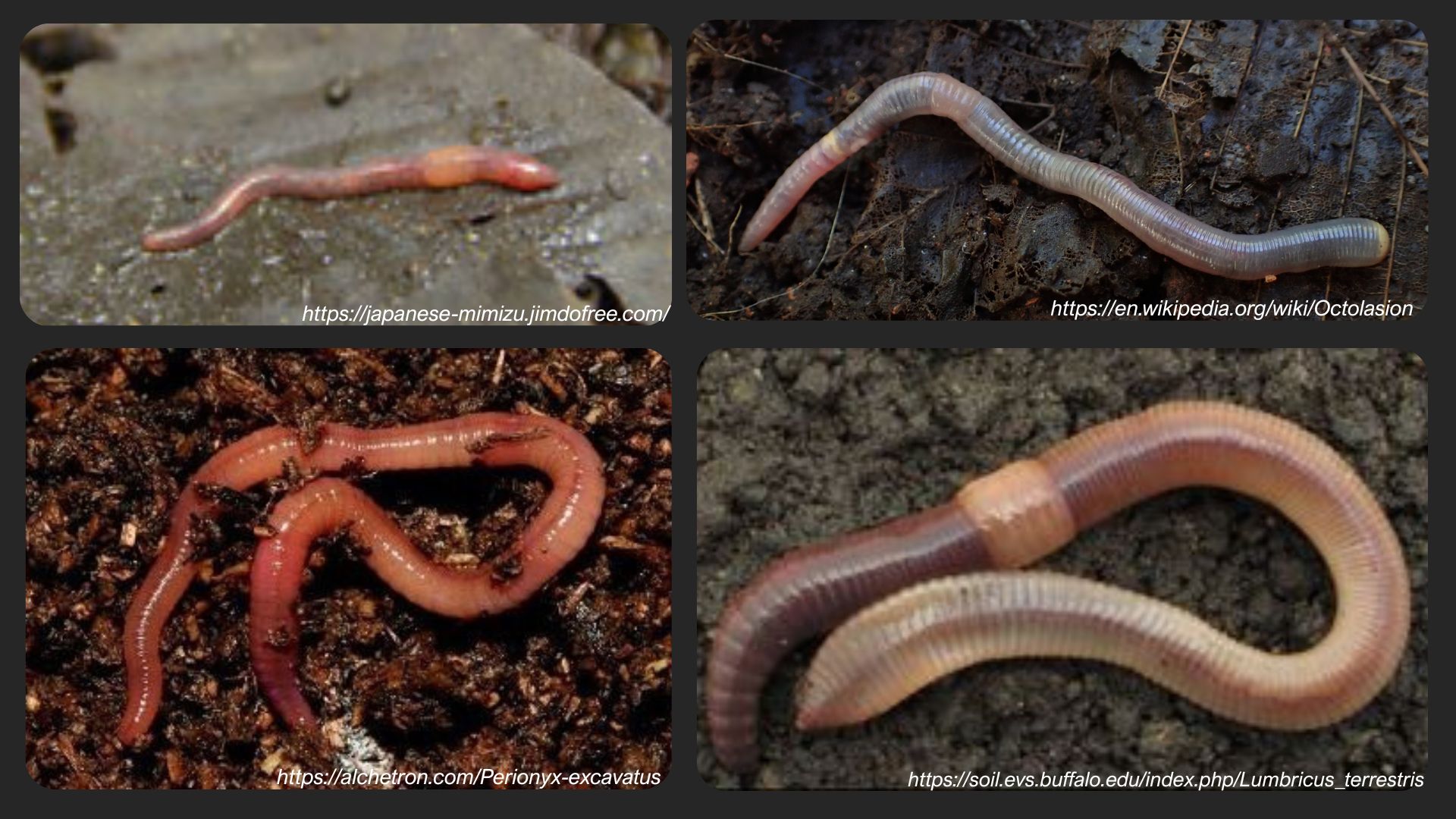
Examples of earthworm species found in Vermont, all showing a visible clitellum.
Jumping Worms
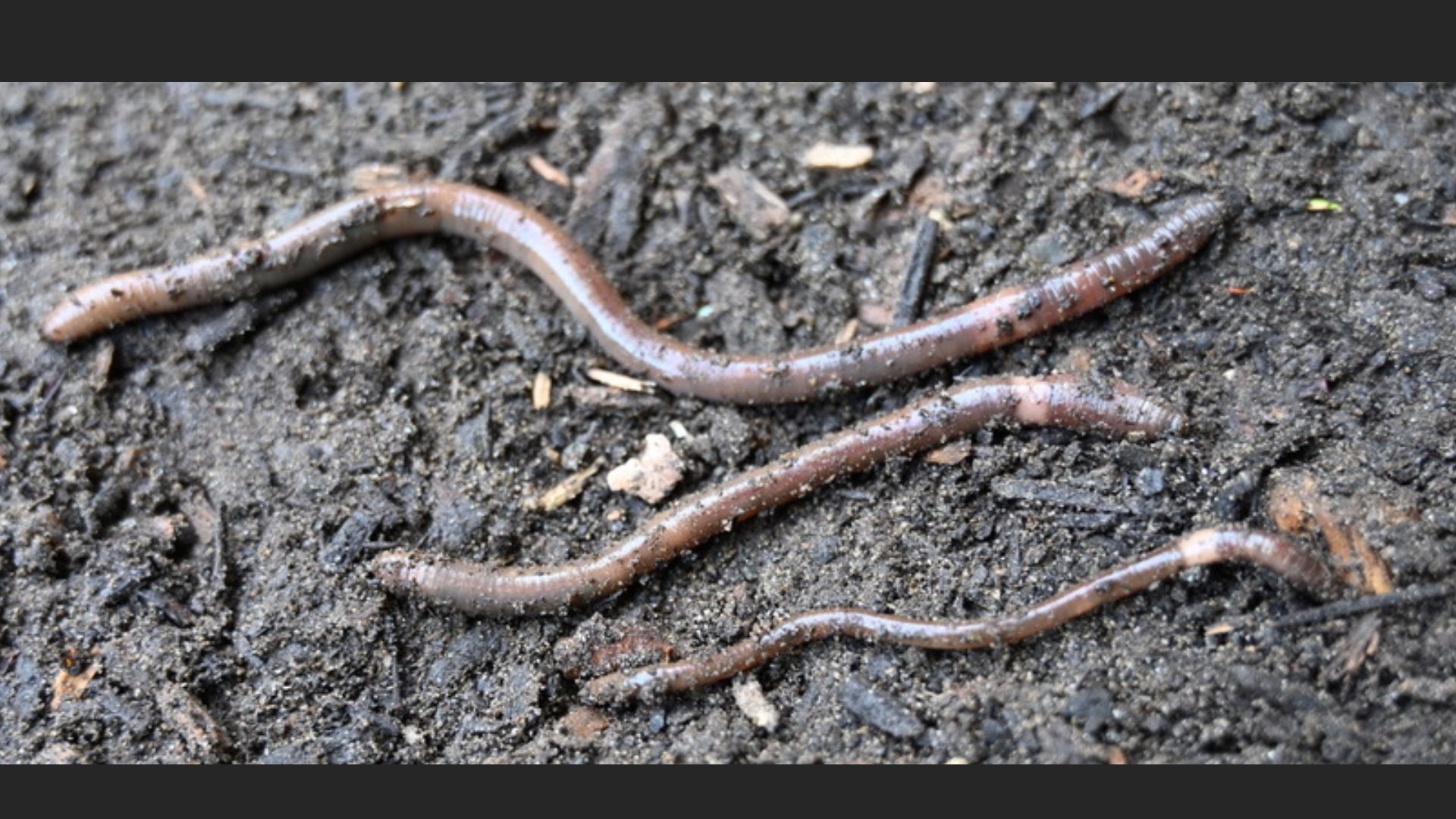
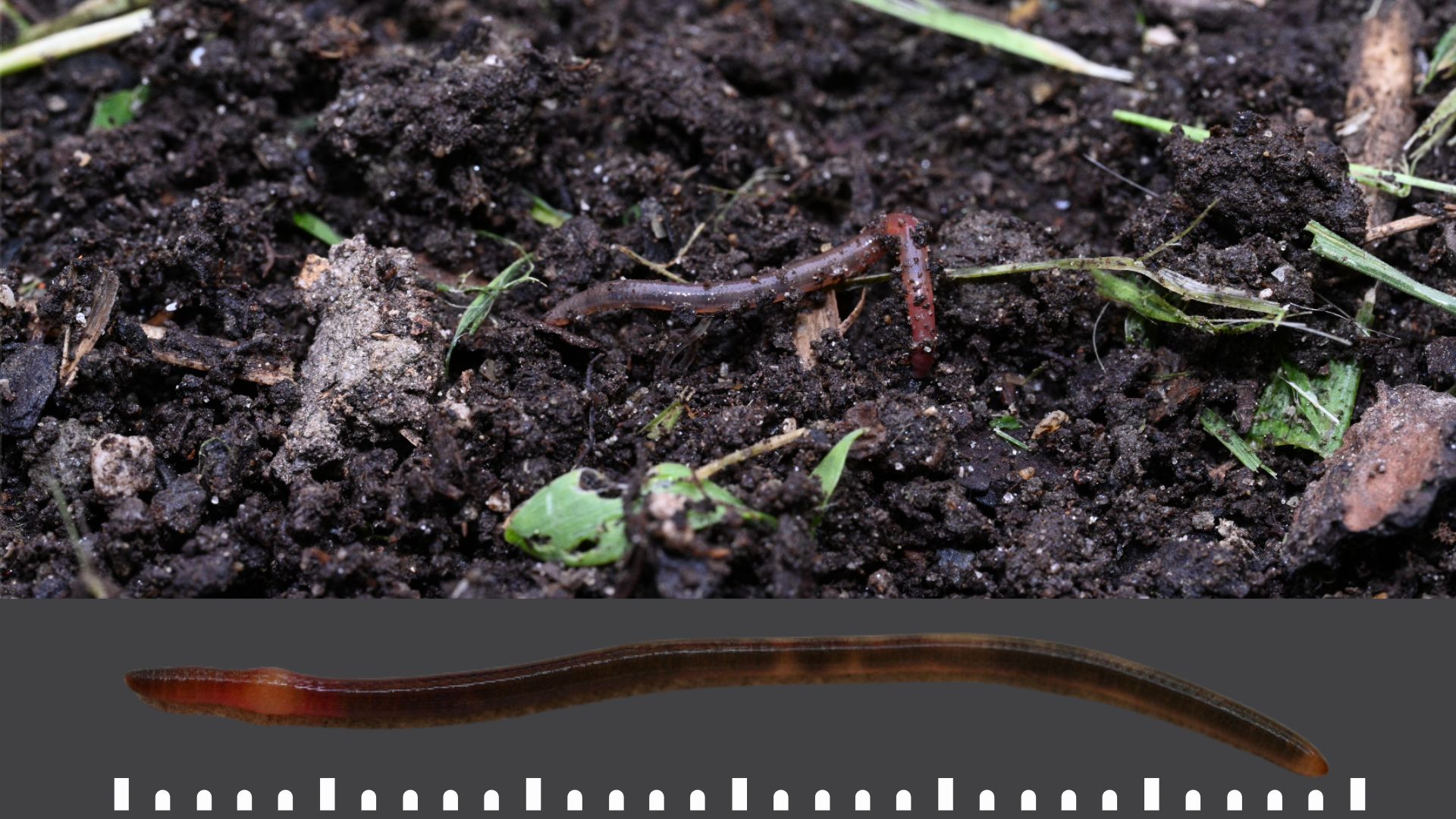
For jumping worm species in the Northeast, identification is particularly challenging. Adults can appear very similar, key diagnostic structures may be missing or subtle, and juveniles and cocoons usually cannot be distinguished confidently by sight alone.
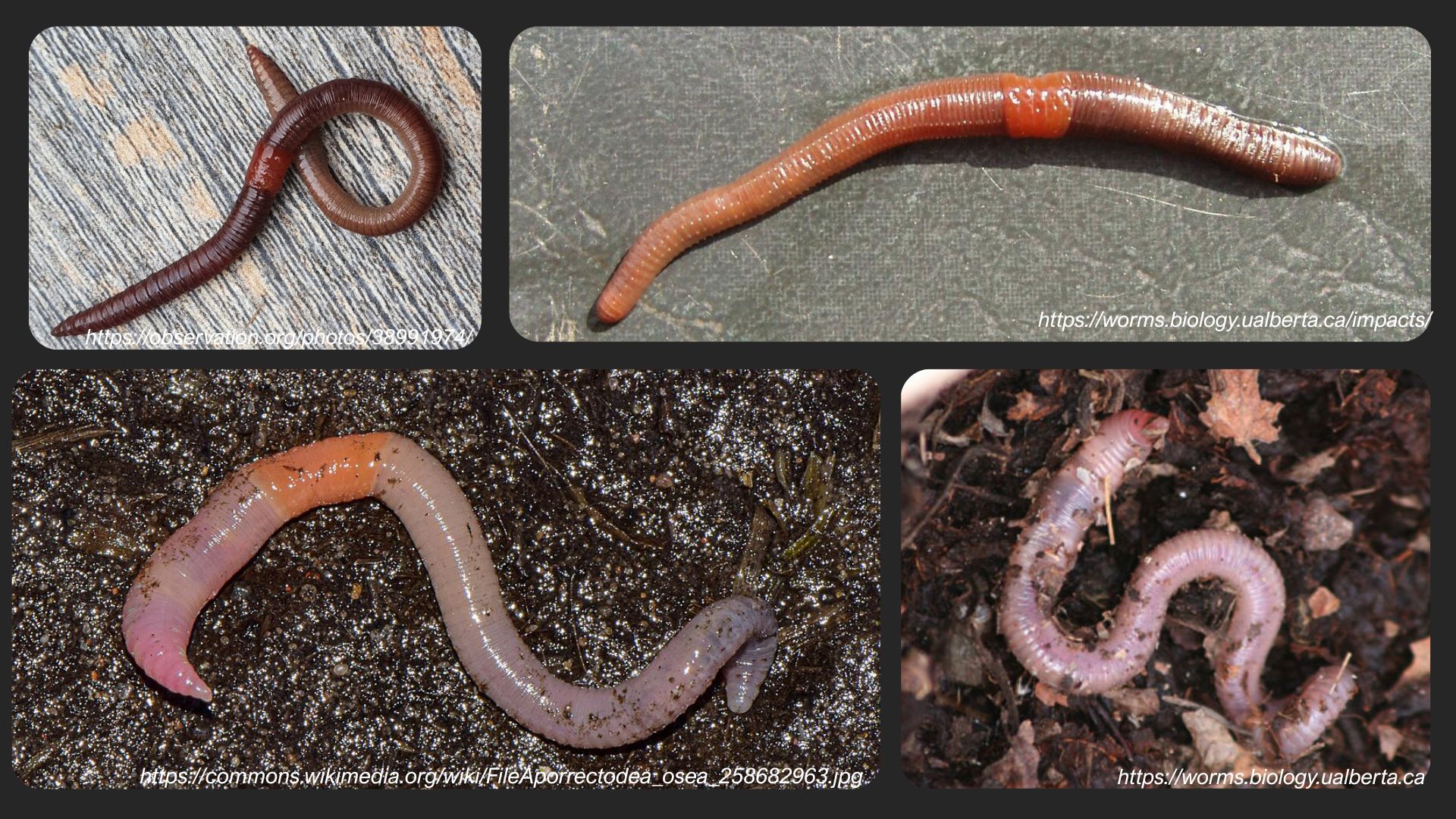
Adults, juveniles, and cocoons of jumping worms.
Amynthas agrestis, Amynthas tokioensis, and Metaphire hilgendorfi are a particularly difficult group because they are very similar in appearance and often occur together. A. agrestis and A. tokioensis are separated by subtle ventral genital markings and pore patterns near the clitellum, while M. hilgendorfi is identified by a different combination of reproductive features.
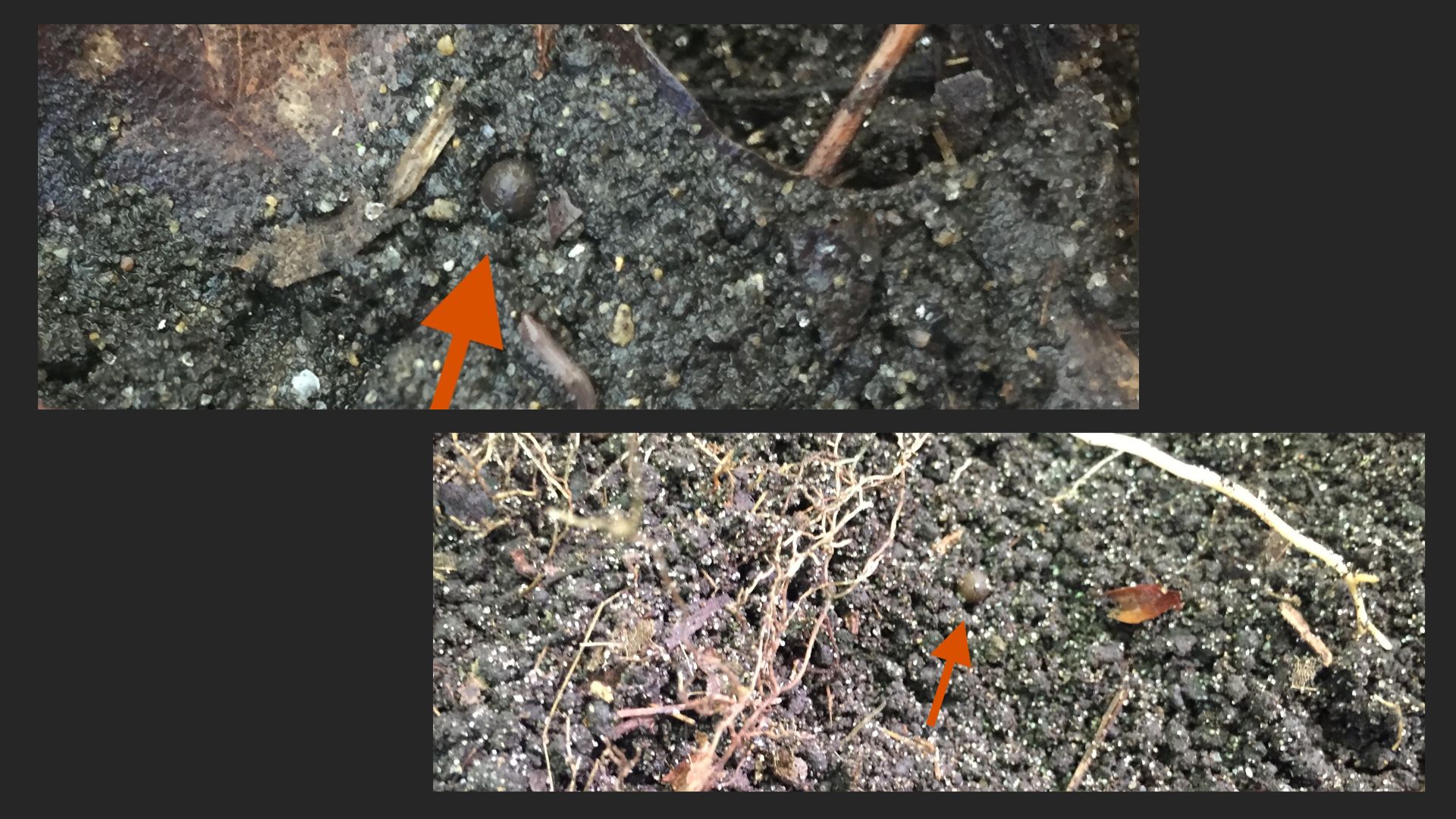
Examples of diagnostic pore and genital structures used for species identification.
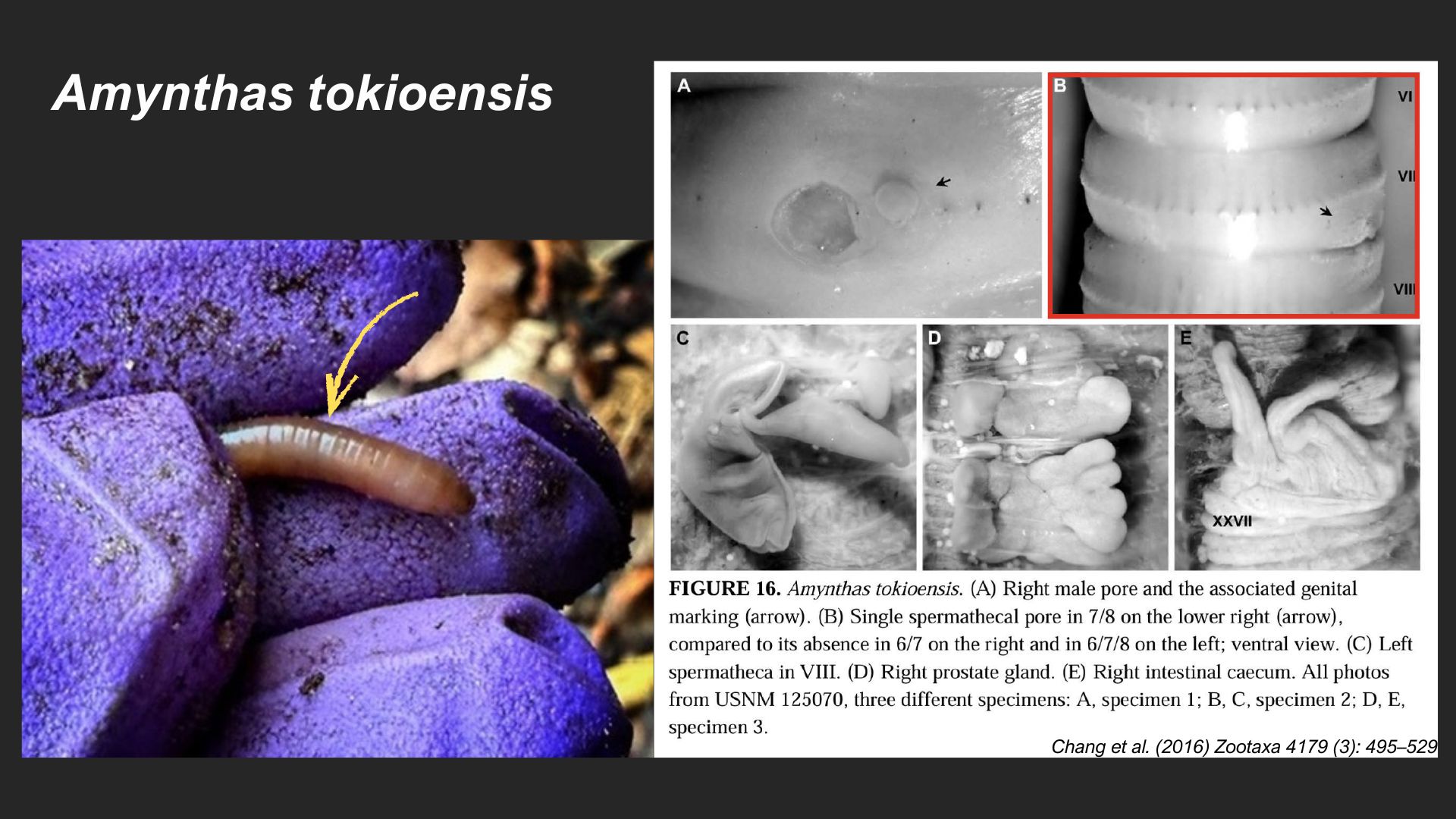
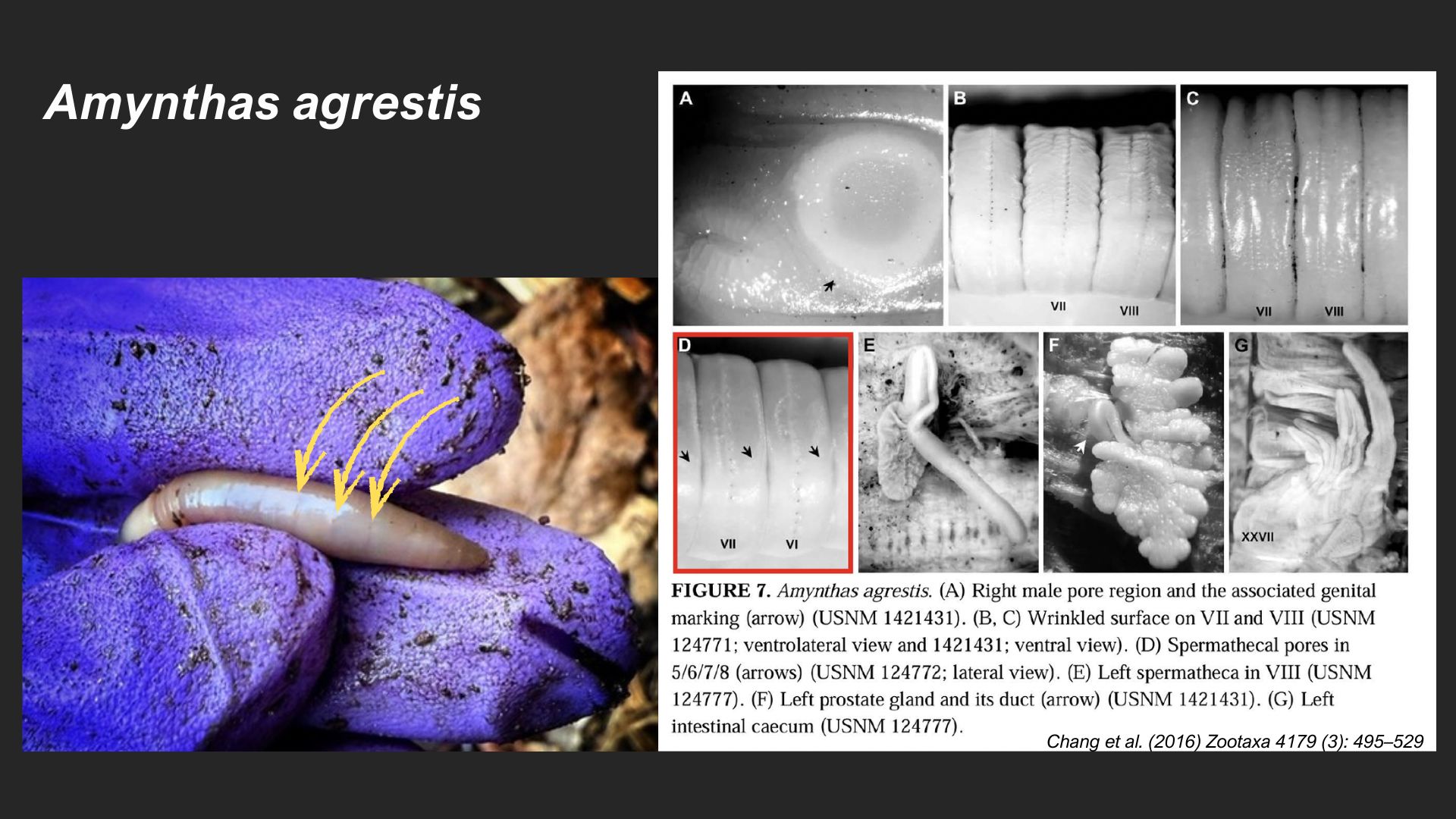
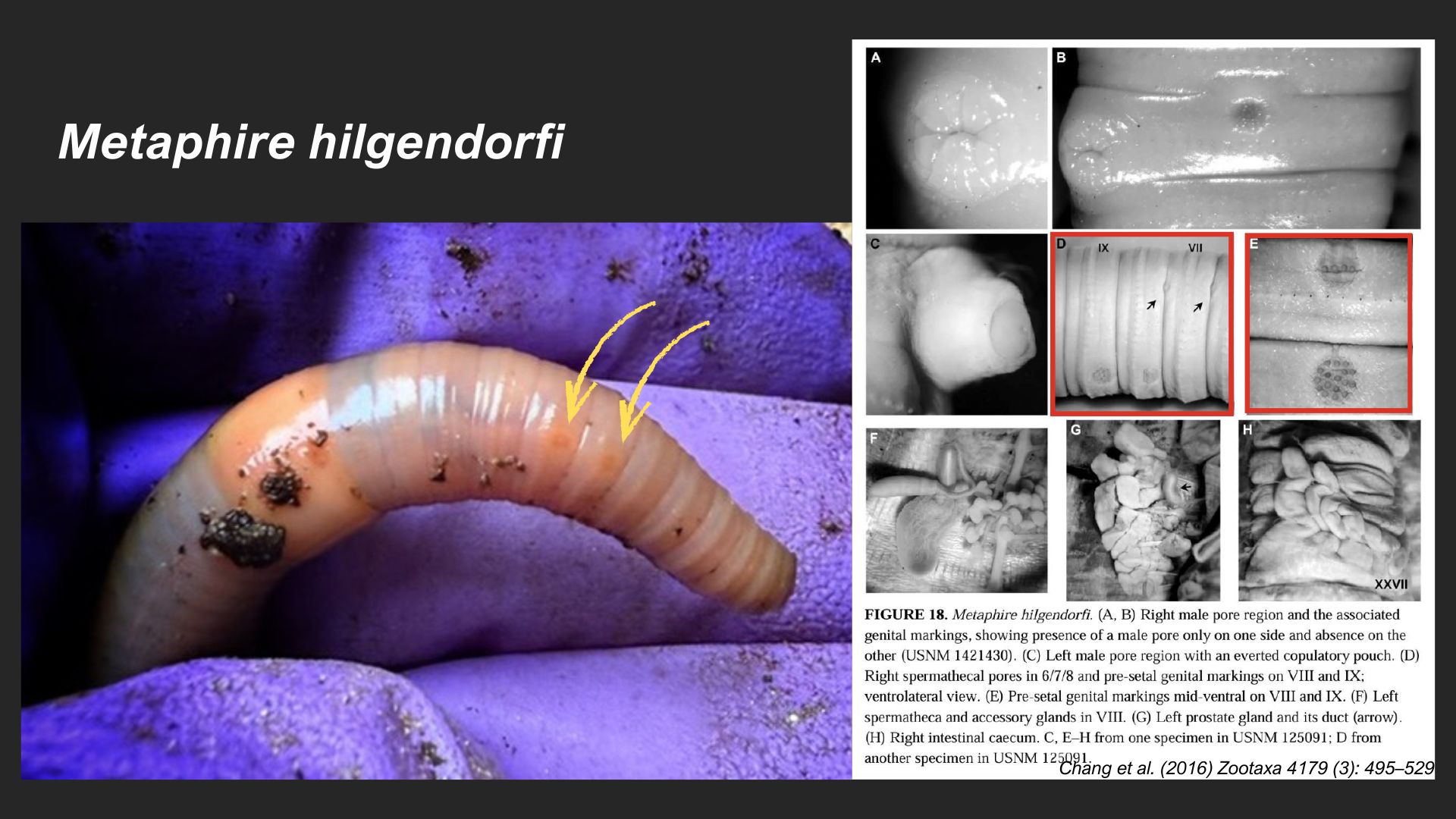
In practice, these characters can be subtle, worn, or completely absent—especially in immature individuals—making misidentification common. Also as you can see in the pictures below, it is really hard to see the pores with naked eyes.
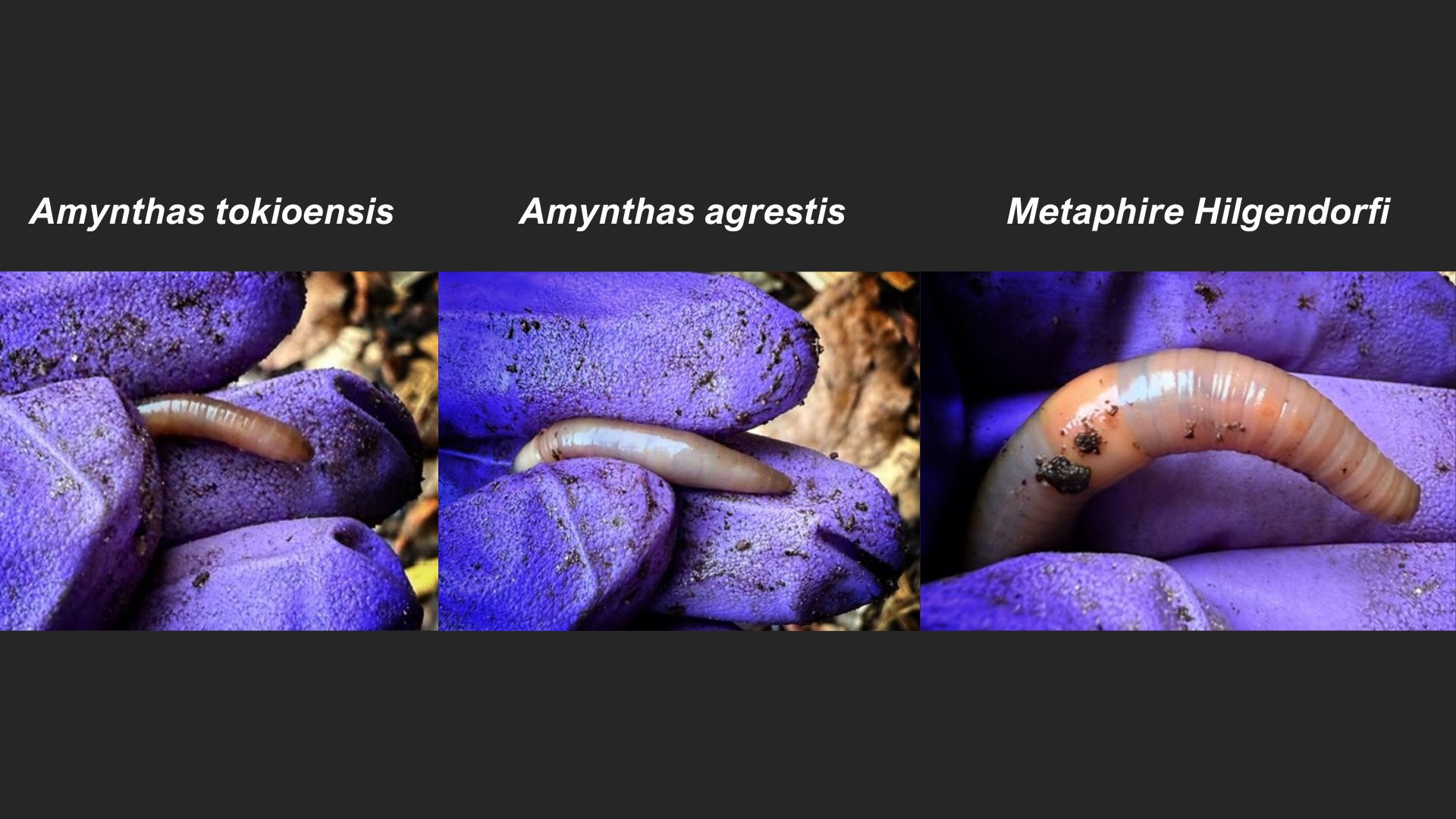
Although species may differ in size, there is often overlap between individuals of difeerent species.
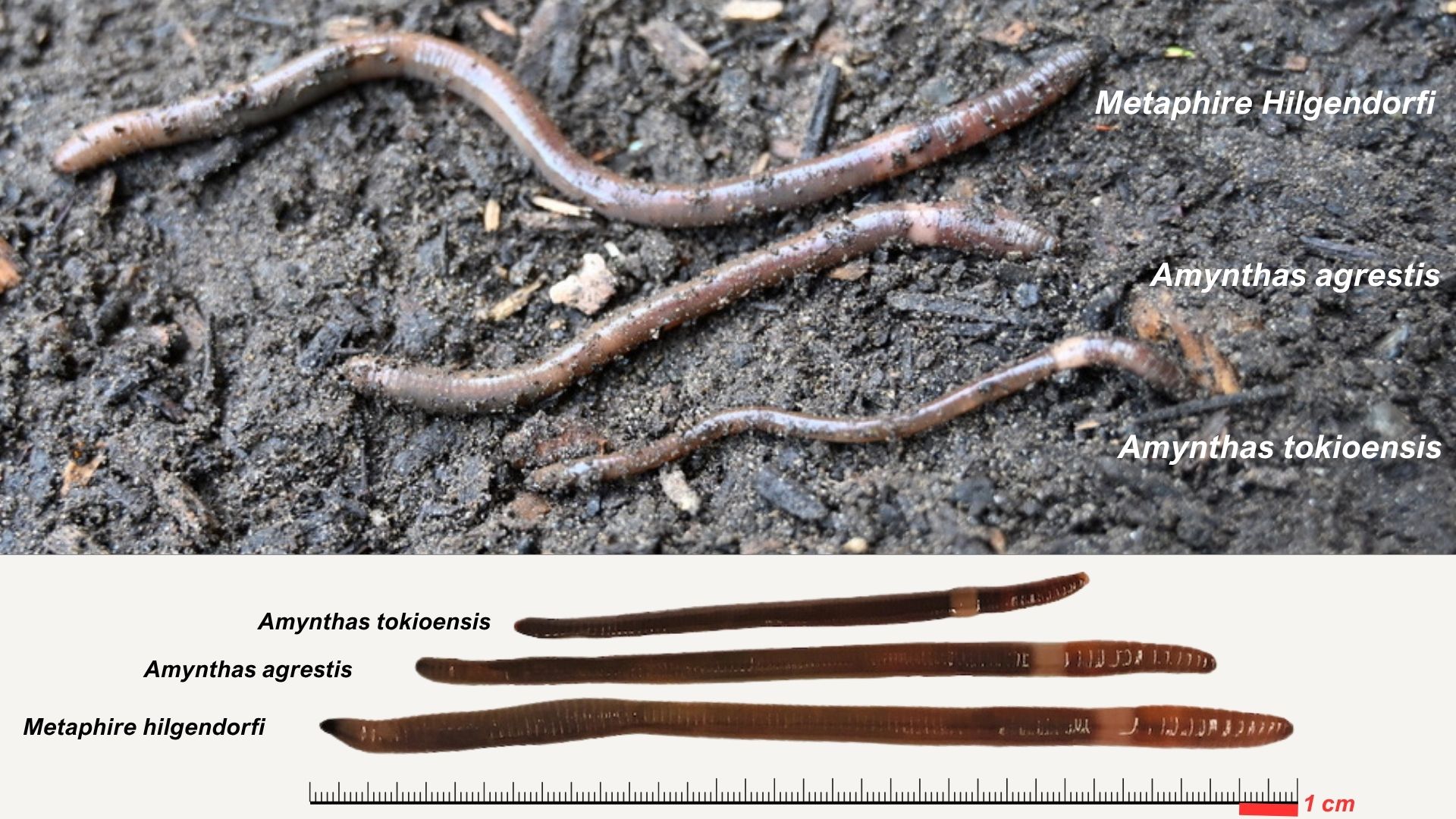
Because of these limitations, molecular approaches such as DNA barcoding or multiplex PCR remain the most reliable methods for accurate species-level identification.
Parasites
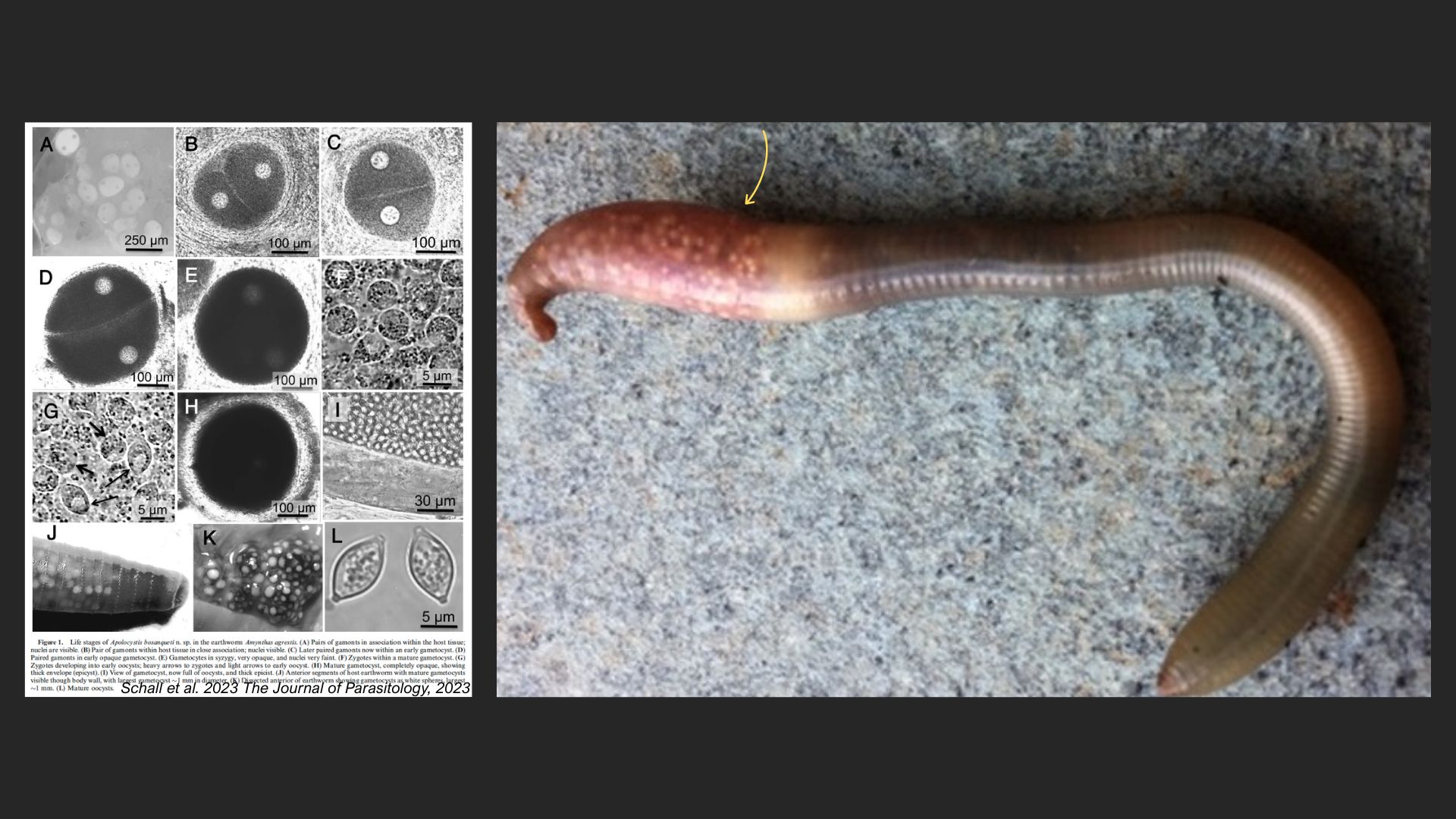
While identifying jumping worms, you may notice small white spherical structures inside the body, often concentrated near the anterior segments. These are not cocoons or eggs. They are internal parasites. At this point, it is still unclear whether they are harmful, neutral, or potentially beneficial to the host.