Before You Start
Click a section below if you’re unsure about key features.
Step 1: Clitellum type
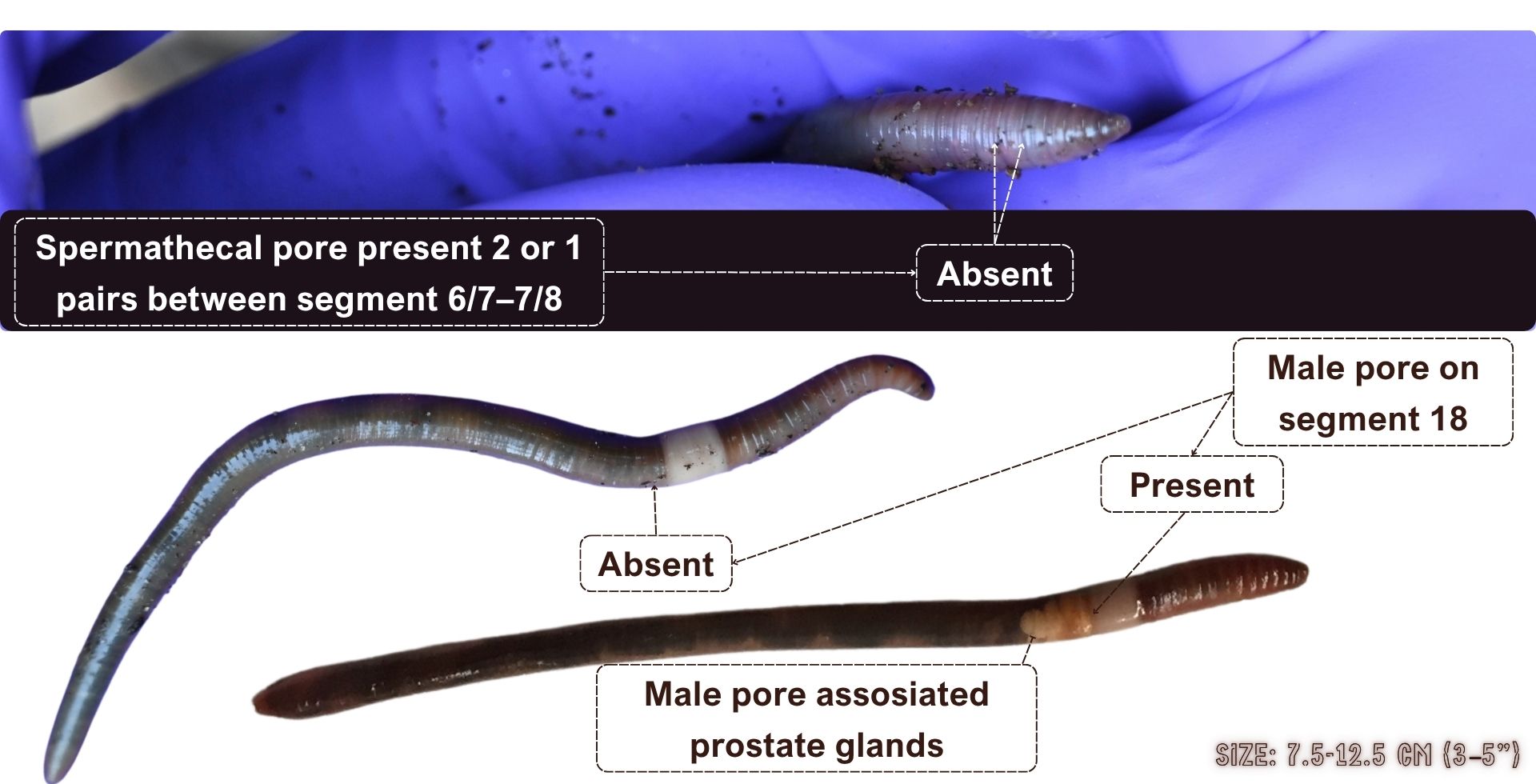
Smooth white clitellum + metallic sheen + paired spermathecal pores
Body size: 7.5–12.5 cm (3–5")
Color: Dark grey to brown with iridescent metallic sheen
Clitellum: Smooth, flat, milky-white, flush with body
Spermathecal pores: If present 1 or 2 pairs (segments 6/7–7/8)
Genital markings: Small circular, usually paired near pores
Male pores: Present on segment 18 or absent
Habitat: Surface soil (epi-endogeic), disturbed soils
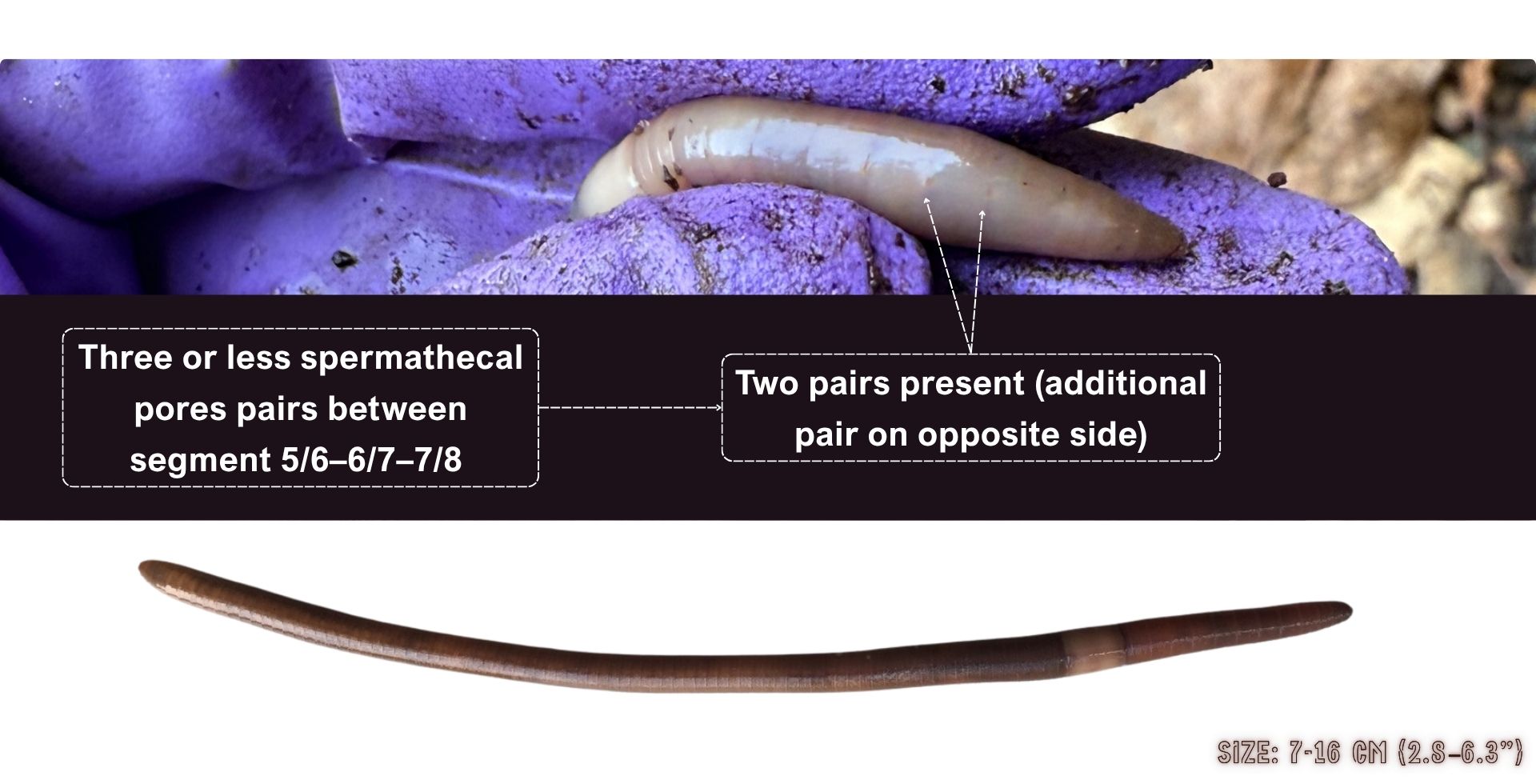
Smooth white clitellum + usually 3 spermathecal pores pairs
Body size: 7–16 cm (2.8–6.3")
Color: Dark grey/brown with metallic sheen
Clitellum: Smooth, milky-white, flush
Spermathecal pores: Usually 3 pairs or less (5/6–6/7–7/8)
Genital markings: Often faint or wrinkled patches (segments 7/8)
Male pores: Usually absent
Habitat: Surface soil (epi-endogeic), disturbed soils
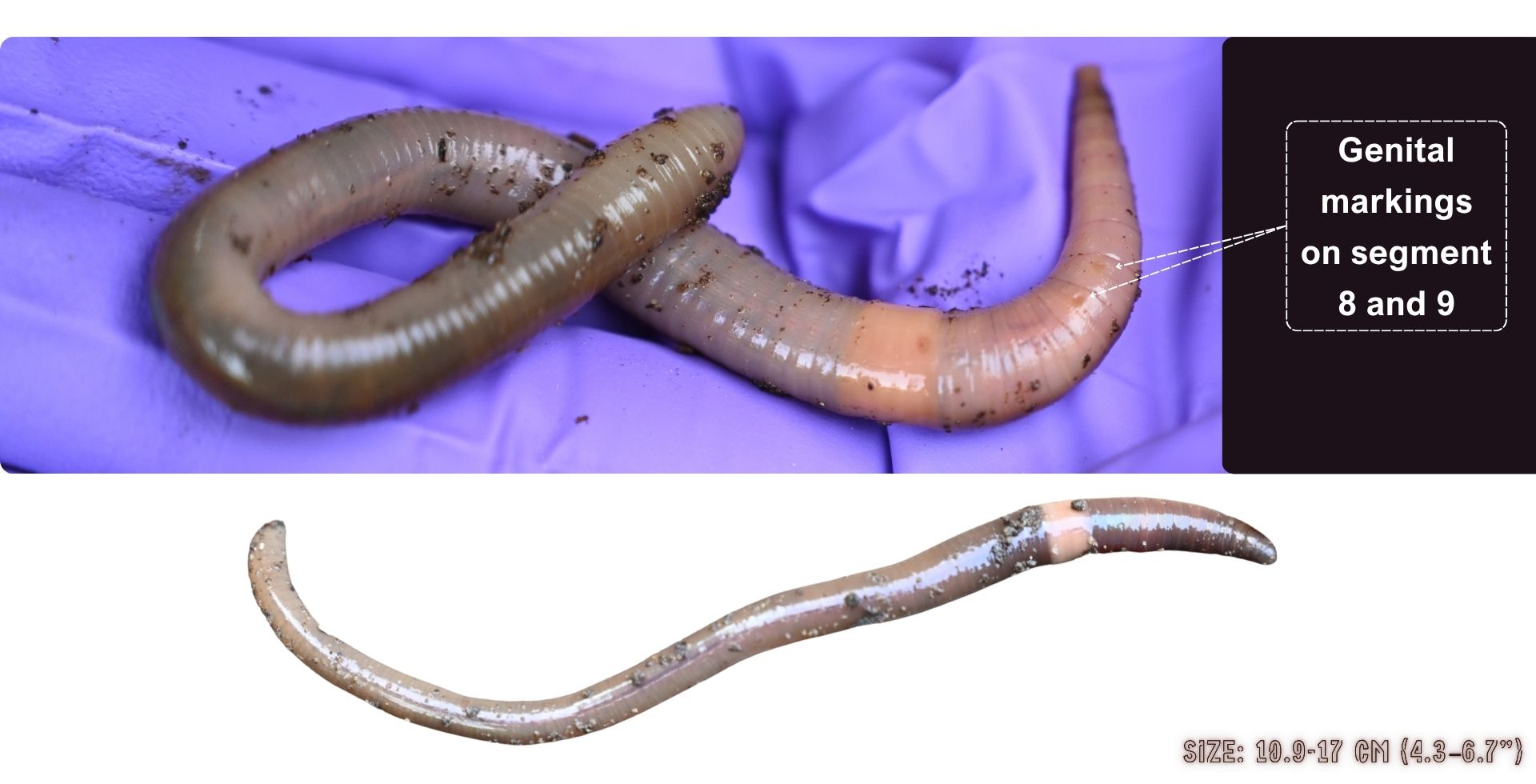
Smooth clitellum + midline genital markings
Body size: 10.9–17 cm (4.3–6.7")
Color: Dark grey/brown with metallic sheen
Clitellum: Smooth, pale, flush
Spermathecal pores: 2 pairs (6/7–7/8)
Genital markings: Clusters of small bumps (tubercles) along midline
Male pores: Usually absent
Habitat: Surface soil (epi-endogeic), disturbed soils
Amynthas tokioensis
Smooth white clitellum + metallic sheen + paired spermathecal pores
Body size: 7.5–12.5 cm (3–5")
Color: Dark grey to brown with iridescent metallic sheen
Clitellum: Smooth, flat, milky-white, flush with body
Spermathecal pores: If present 1 or 2 pairs (segments 6/7–7/8)
Genital markings: Small circular, usually paired near pores
Male pores: Present on segment 18 or absent
Habitat: Surface soil (epi-endogeic), disturbed soils
Amynthas agrestis
Smooth white clitellum + usually 3 spermathecal pores pairs
Body size: 7–16 cm (2.8–6.3")
Color: Dark grey/brown with metallic sheen
Clitellum: Smooth, milky-white, flush
Spermathecal pores: Usually 3 pairs or less (5/6–6/7–7/8)
Genital markings: Often faint or wrinkled patches (segments 7/8)
Male pores: Usually absent
Habitat: Surface soil (epi-endogeic), disturbed soils
Metaphire hilgendorfi
Smooth clitellum + midline genital markings
Body size: 10.9–17 cm (4.3–6.7")
Color: Dark grey/brown with metallic sheen
Clitellum: Smooth, pale, flush
Spermathecal pores: 2 pairs (6/7–7/8)
Genital markings: Clusters of small bumps (tubercles) along midline
Male pores: Usually absent
Habitat: Surface soil (epi-endogeic), disturbed soils
Step 2: Body pattern
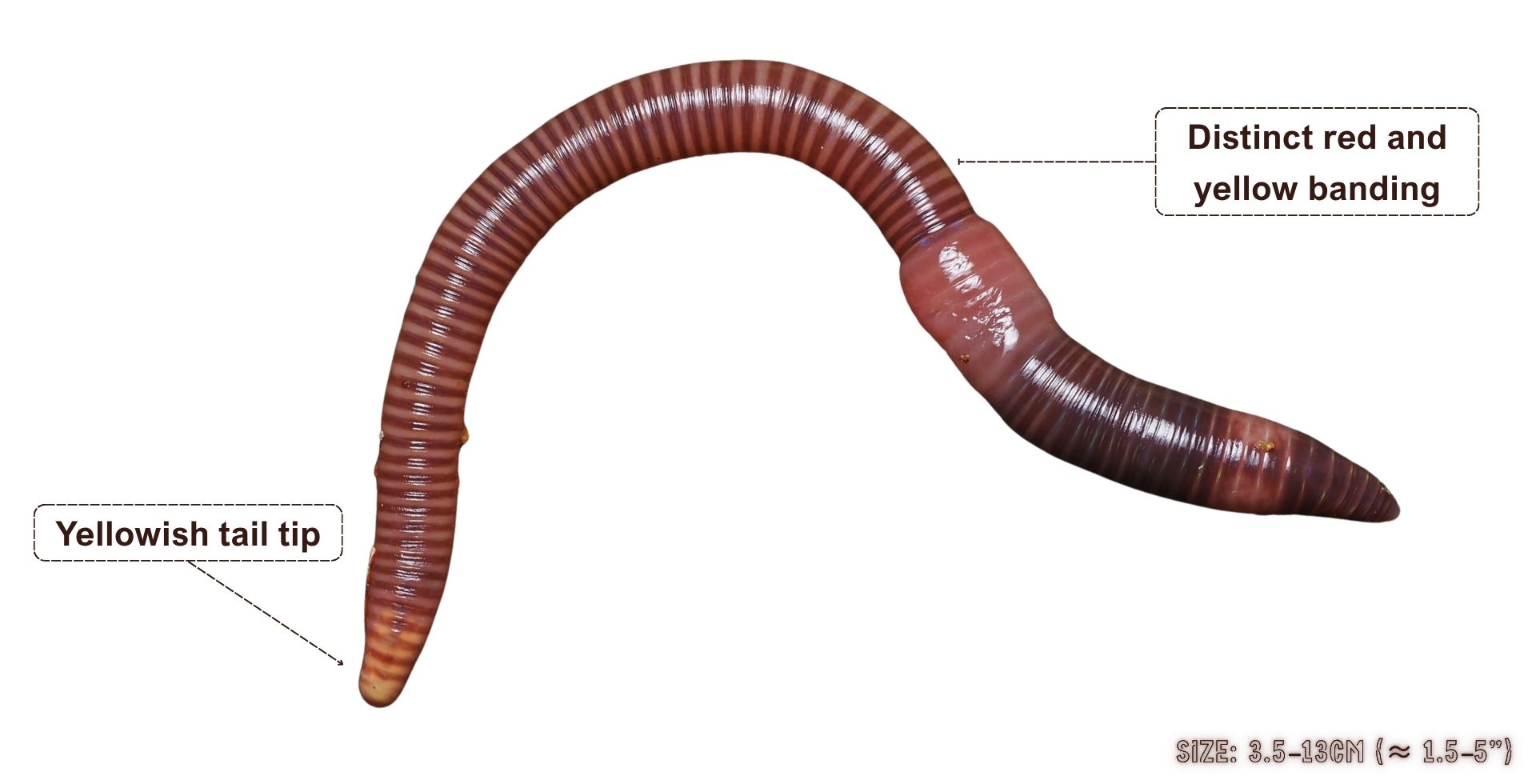
Strong red/yellow striping + yellow tail tip
Body size: 3.5–13 cm (1.5–5")
Color: Alternating dark red and yellowish bands
Clitellum: Raised, saddle-shaped
Male pores: Present but not diagnostic in field
Habitat: Compost, manure, organic waste, surface layers (epigeic), rarely found deep in mineral soil
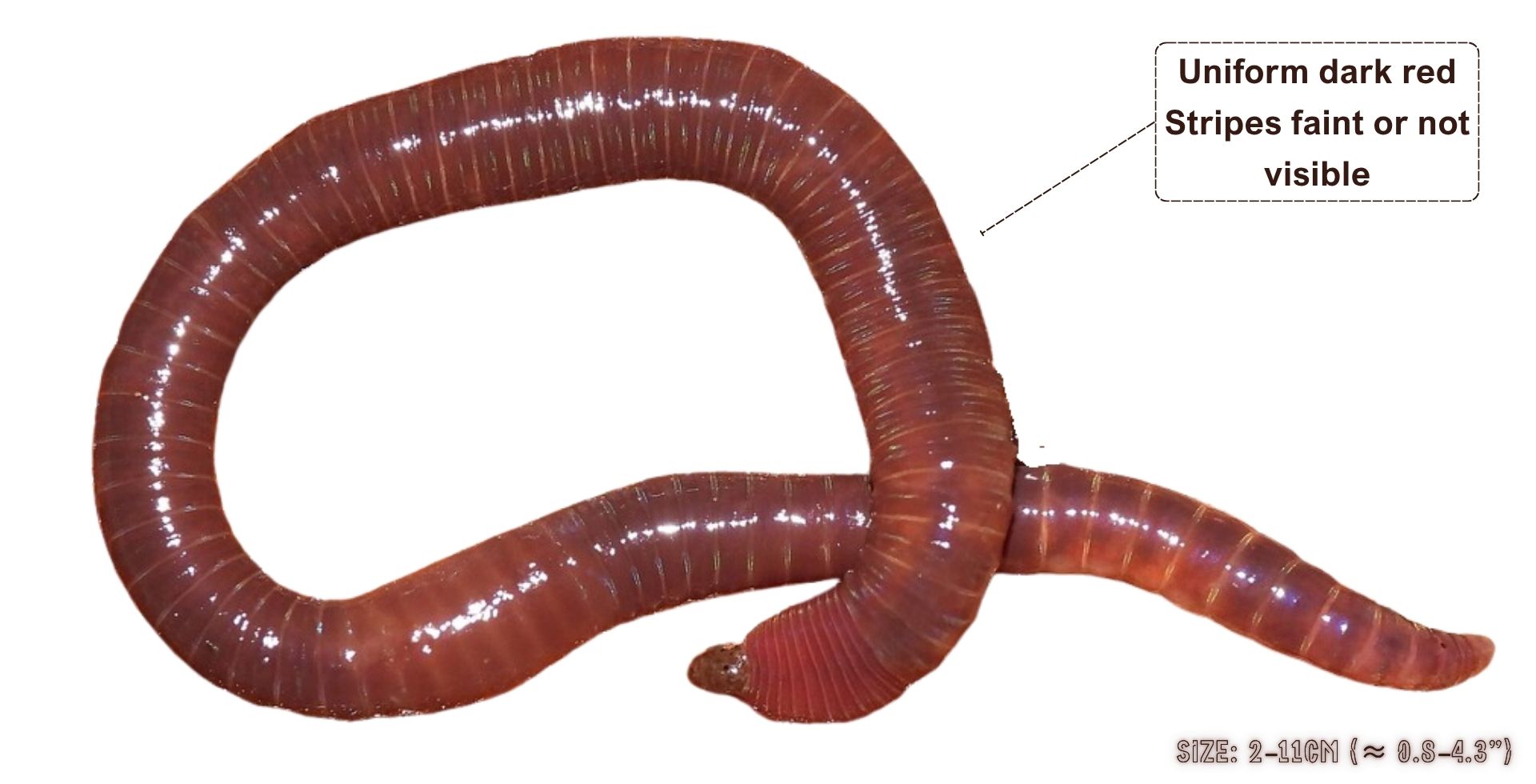
Uniform dark red + no yellow tail
Body size: 2–11 cm (0.8–4.3")
Color: Dark red, striping faint or absent
Clitellum: Raised
Male pores: Not field diagnostic
Habitat: Compost, manure, organic-rich, surface layers (epigeic), rarely found deep in mineral soil
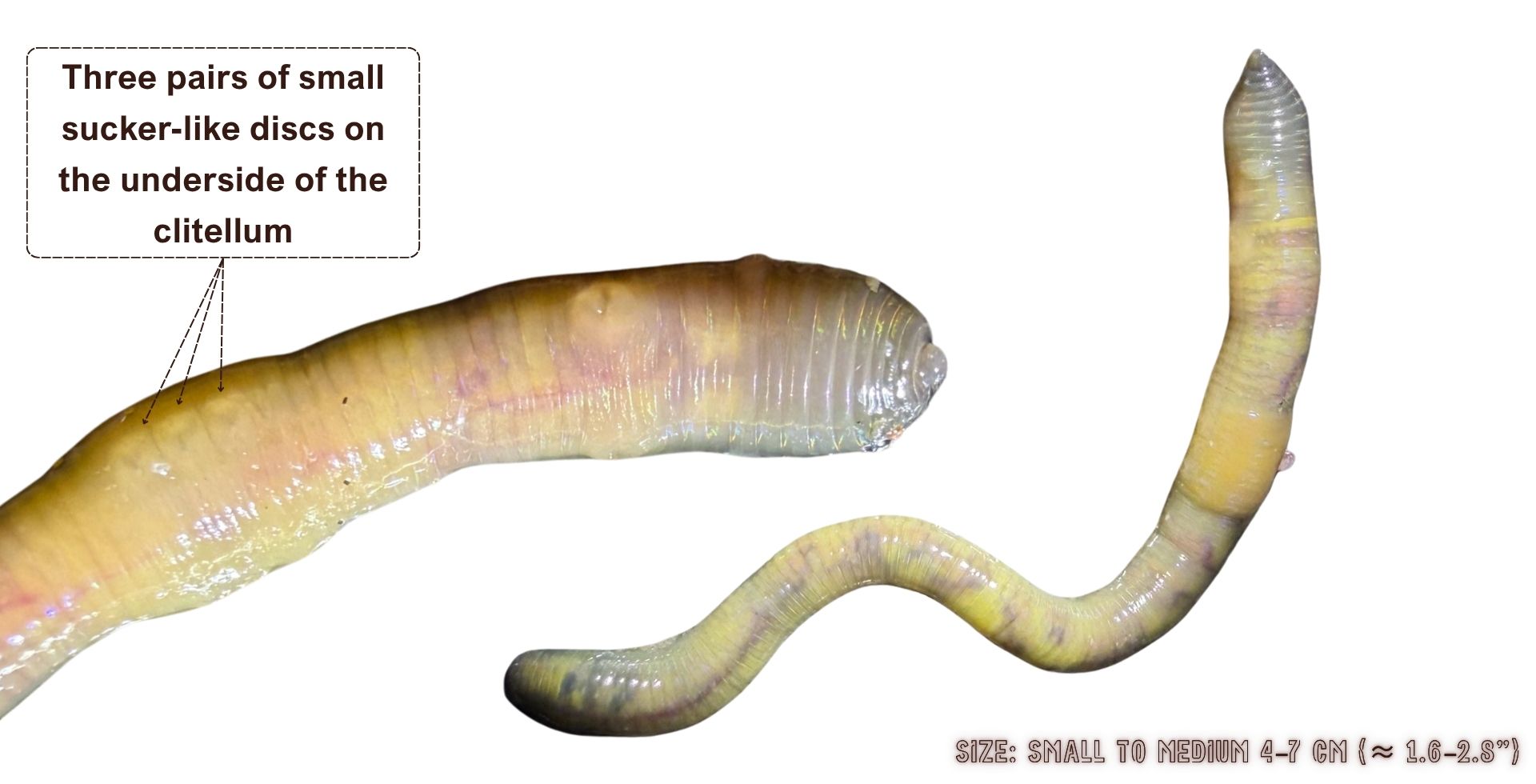
Green body + underside sucker-like discs
Body size: 4–7 cm (1.6–2.8")
Color: Green (common) or pale pink morphs
Clitellum: Raised
Special feature: Three pairs of sucker-like discs under clitellum
Male pores: Present
Habitat: Wet soils, gardens, riverbanks, clay soils, often remains below surface (endogeic)
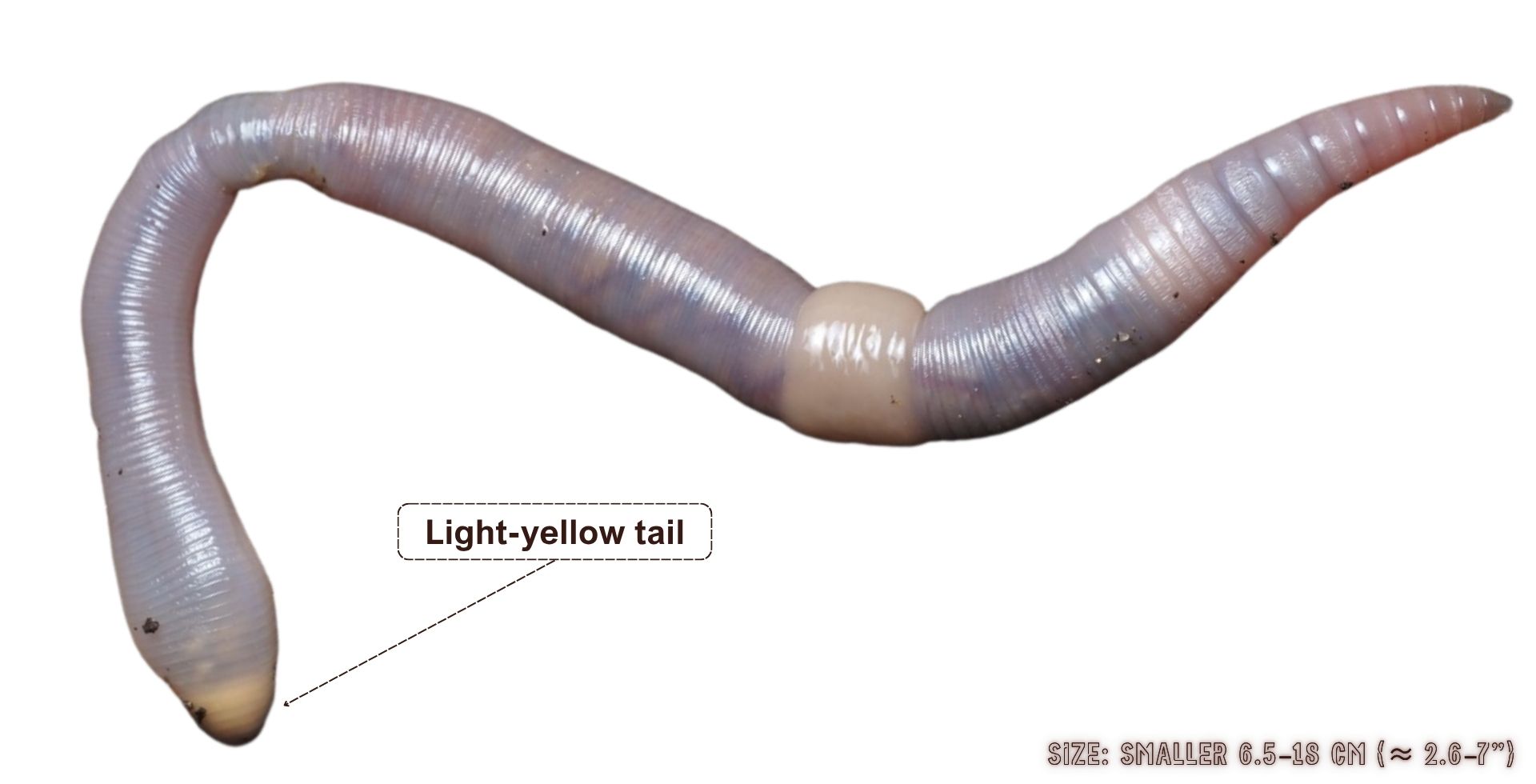
Blue-grey body + yellow tail
Body size: 6.5–18 cm (2.6–7")
Color: Blue-grey
Tail: Pale yellow
Clitellum: Light-colored, distinct
Habitat: Moist soil, under stones, logs, near streams (epi-endogeic), often in woodland or moist environments
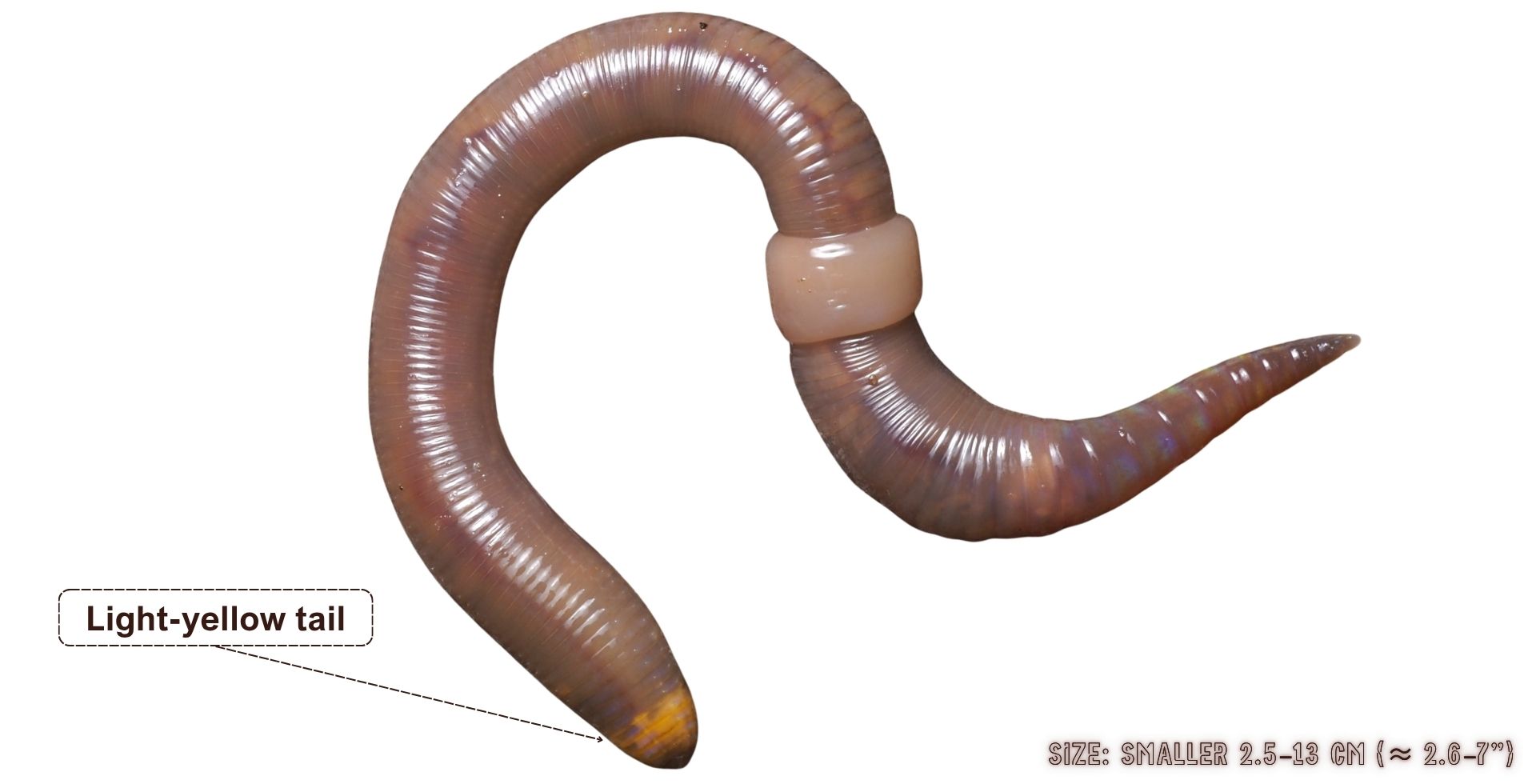
Pale body + yellow tail + light clitellum
Body size: 2.5–13 cm
Color: Pale whitish to grey-pink
Tail: Yellow
Clitellum: Reddish-orange to beige
Habitat: Forest soils (endogeic), gardens, debris, moist environments
Eisenia fetida (Tiger worm)
Strong red/yellow striping + yellow tail tip
Body size: 3.5–13 cm (1.5–5")
Color: Alternating dark red and yellowish bands
Clitellum: Raised, saddle-shaped
Male pores: Present but not diagnostic in field
Habitat: Compost, manure, organic waste, surface layers (epigeic), rarely found deep in mineral soil
Eisenia andrei (Red tiger worm)
Uniform dark red + no yellow tail
Body size: 2–11 cm (0.8–4.3")
Color: Dark red, striping faint or absent
Clitellum: Raised
Male pores: Not field diagnostic
Habitat: Compost, manure, organic-rich, surface layers (epigeic), rarely found deep in mineral soil
Allolobophora chlorotica (Green worm)
Green body + underside sucker-like discs
Body size: 4–7 cm (1.6–2.8")
Color: Green (common) or pale pink morphs
Clitellum: Raised
Special feature: Three pairs of sucker-like discs under clitellum
Male pores: Present
Habitat: Wet soils, gardens, riverbanks, clay soils, often remains below surface (endogeic)
Step 3: Male pores
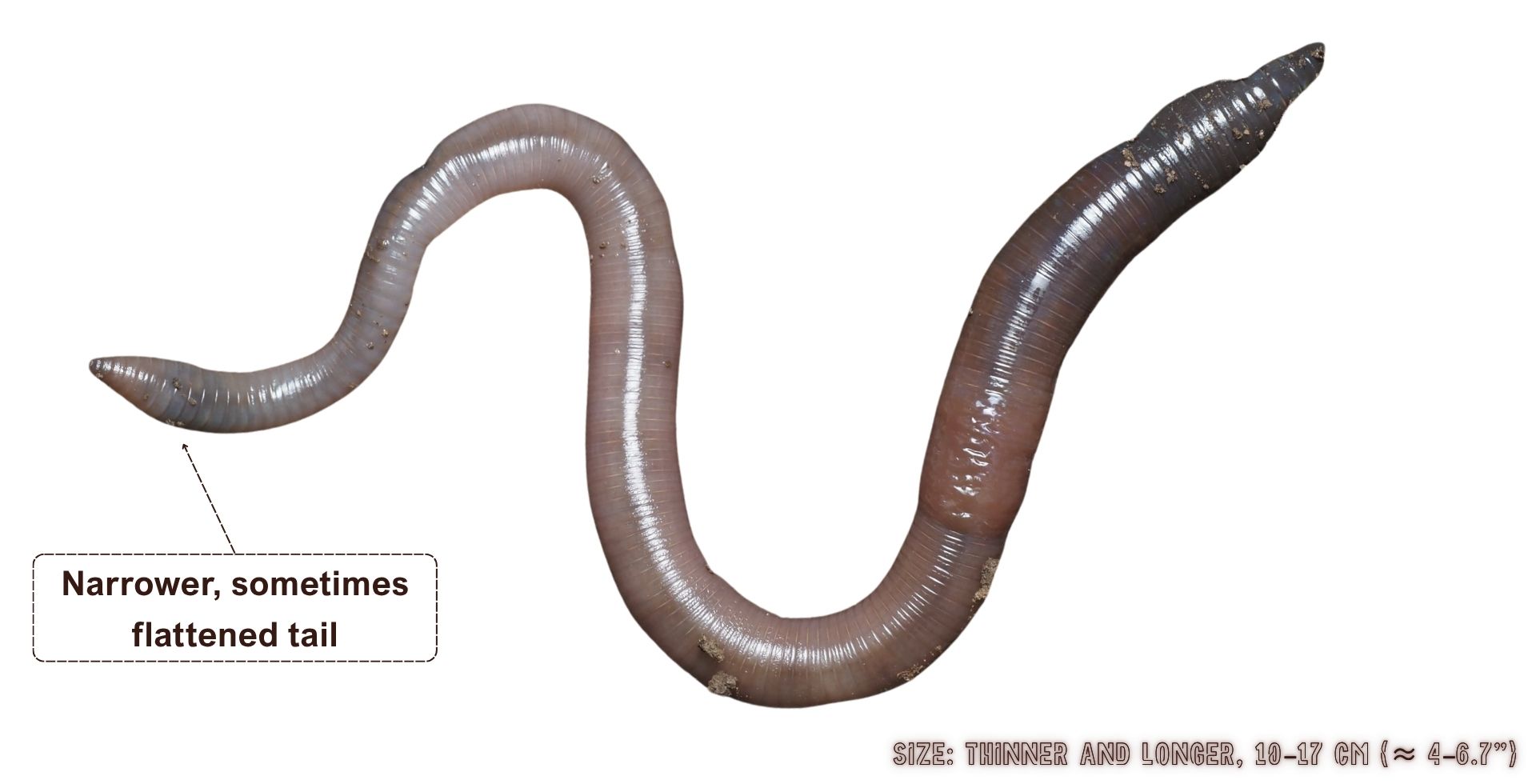
Long, thin + dark head + deep burrower
Body size: 10–17 cm (4–6.7")
Color: Dark head, pale grey/brown body
Shape: Slender, elongated
Male pores: Visible, large
Habitat: Deep vertical burrows (anecic)
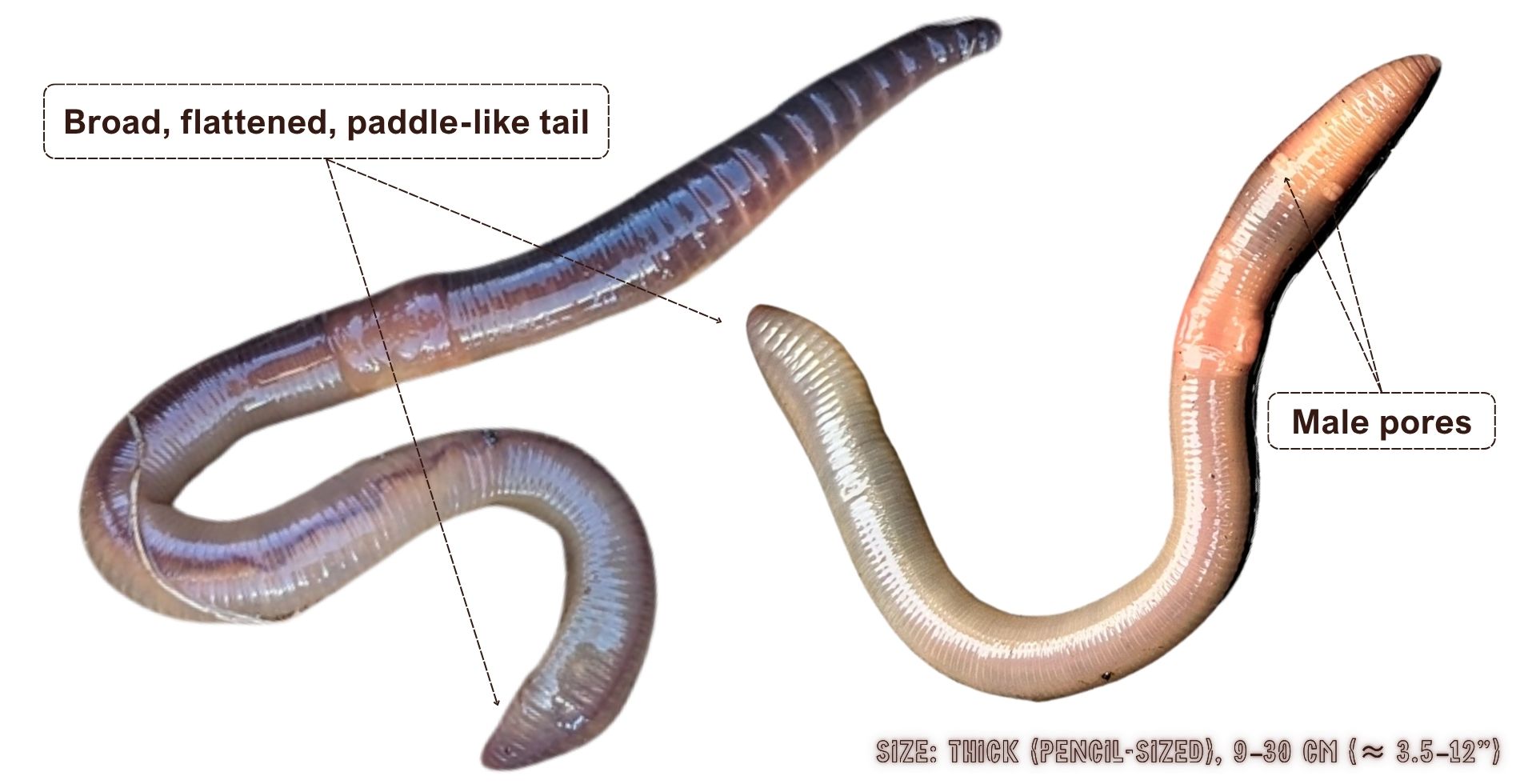
Large, thick + paddle tail + deep burrow
Body size: 9–30 cm (3.5–12")
Color: Strong gradient (dark head → pale tail)
Shape: Thick, cylindrical (pencil-sized)
Tail: Broad, flattened (paddle-like)
Male pores: Visible, large
Habitat: Deep vertical burrows (anecic), pulls organic matter into burrows
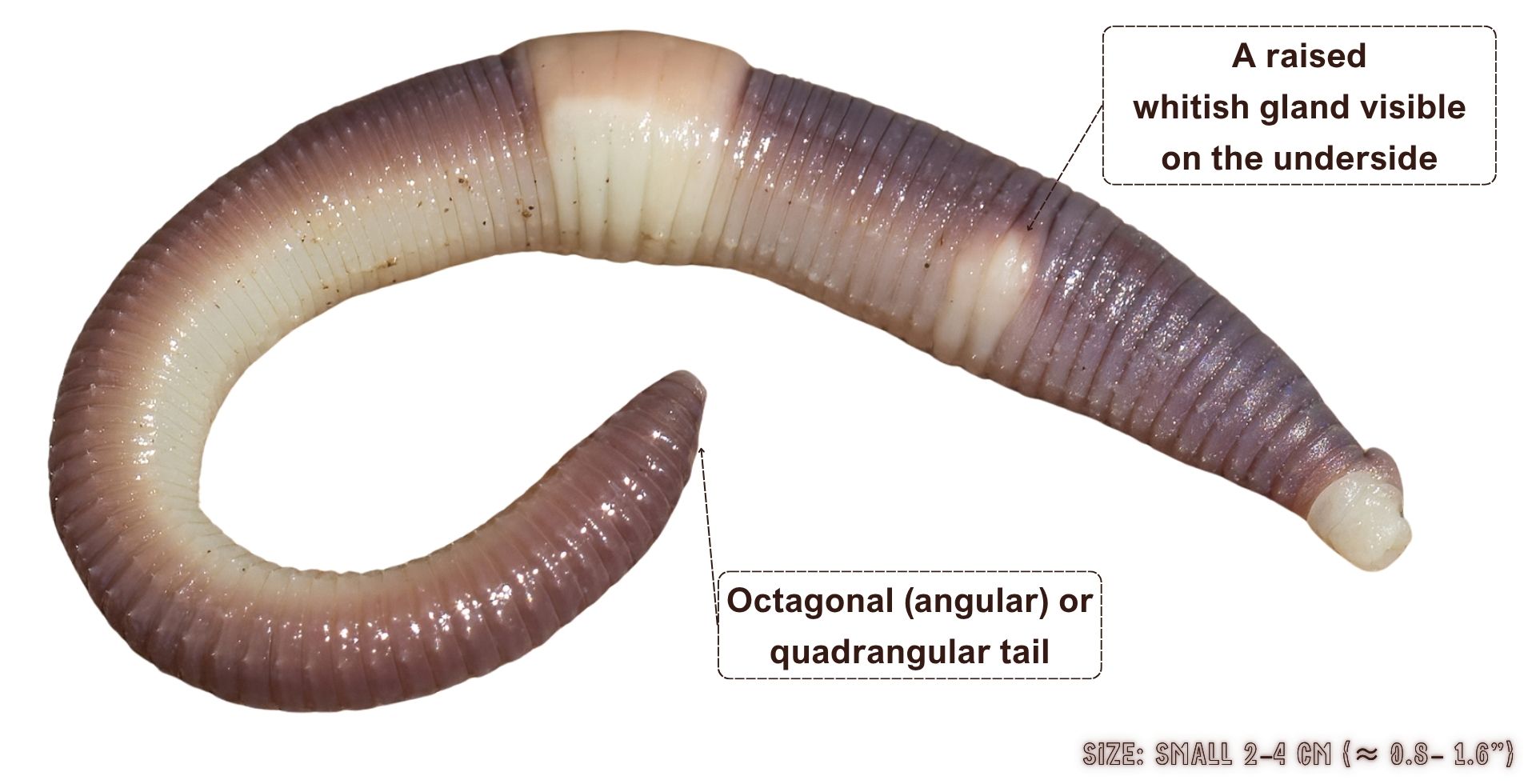
Small + angular tail + cold tolerant
Body size: 2–4 cm (0.8–1.6")
Color: Reddish-violet to dark red
Tail: Angular (octagonal/quadrangular)
Special Feature: A raised whitish gland visible on the underside between the saddle and the head
Male pores: Visible, small
Habitat: Leaf litter (epigeic), moss, under logs, highly cold-tolerant, common in forest litter layers
Other name: Bimastos rubidus
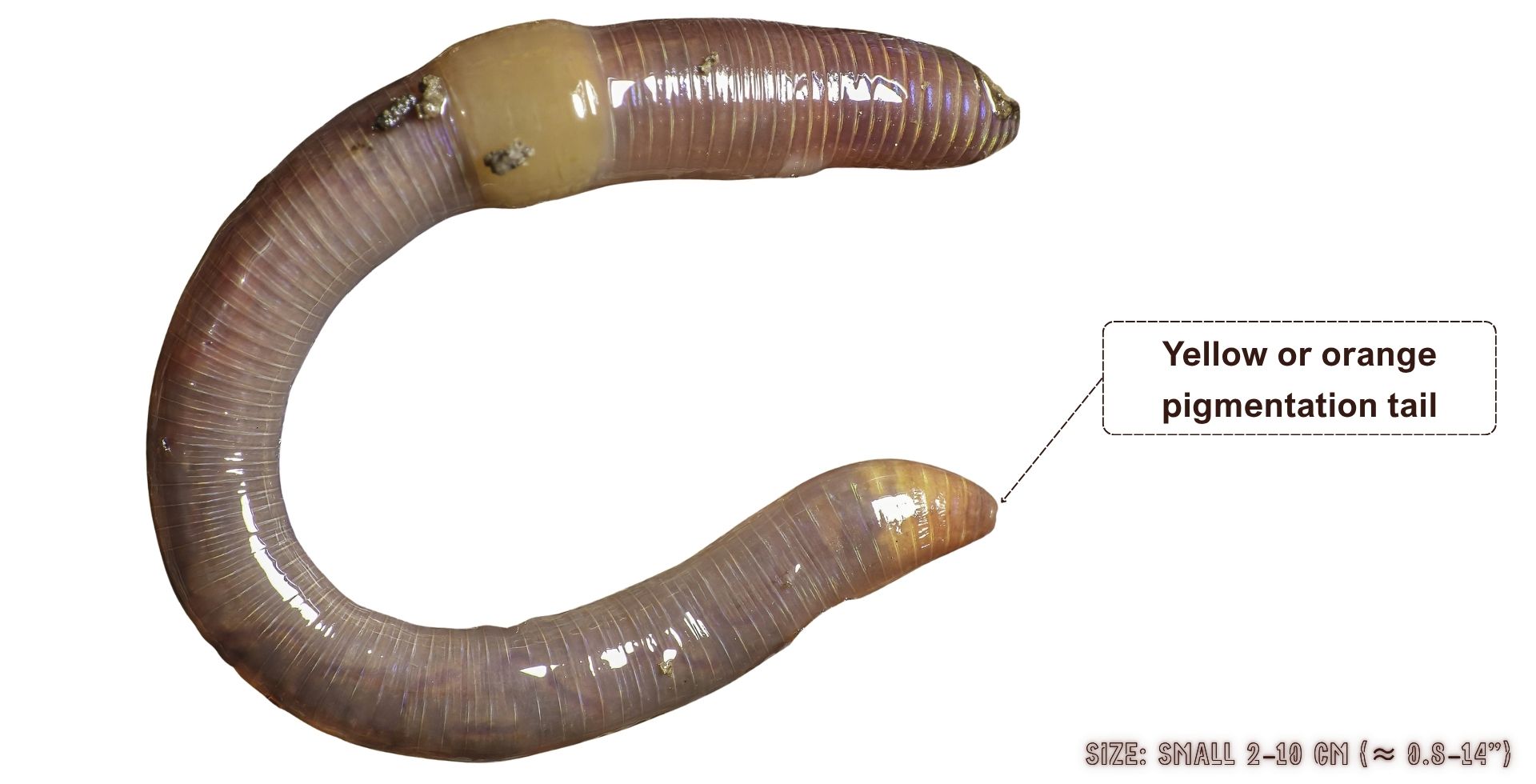
Small + yellow/orange tail
Body size: 2–10 cm (0.8–4")
Color: Reddish-violet to dark red
Tail: Yellow or orange pigmented
Male pores: Visible, small
Habitat: litter-dwelling species (epigeic), organic-rich soils, decaying wood, moss, highly cold-tolerant
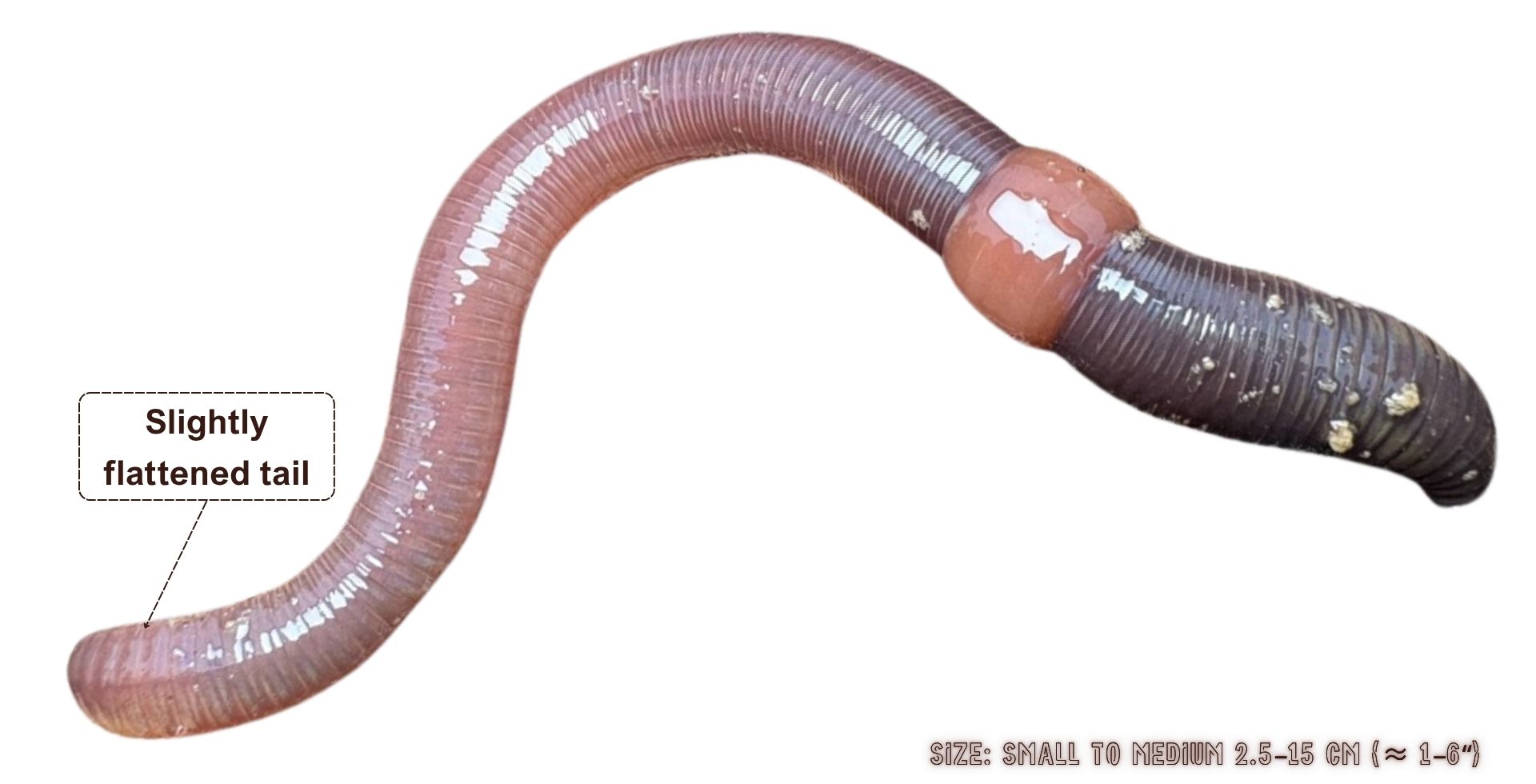
Red head fading to pale tail
Body size: 2.5–15 cm (1–6")
Color: Red anterior fading toward lighter posterior
Tail: Slightly flattened
Male pores: Not visible
Habitat: Litter (epigeic), compost, under logs, common surface-dwelling species in disturbed soils
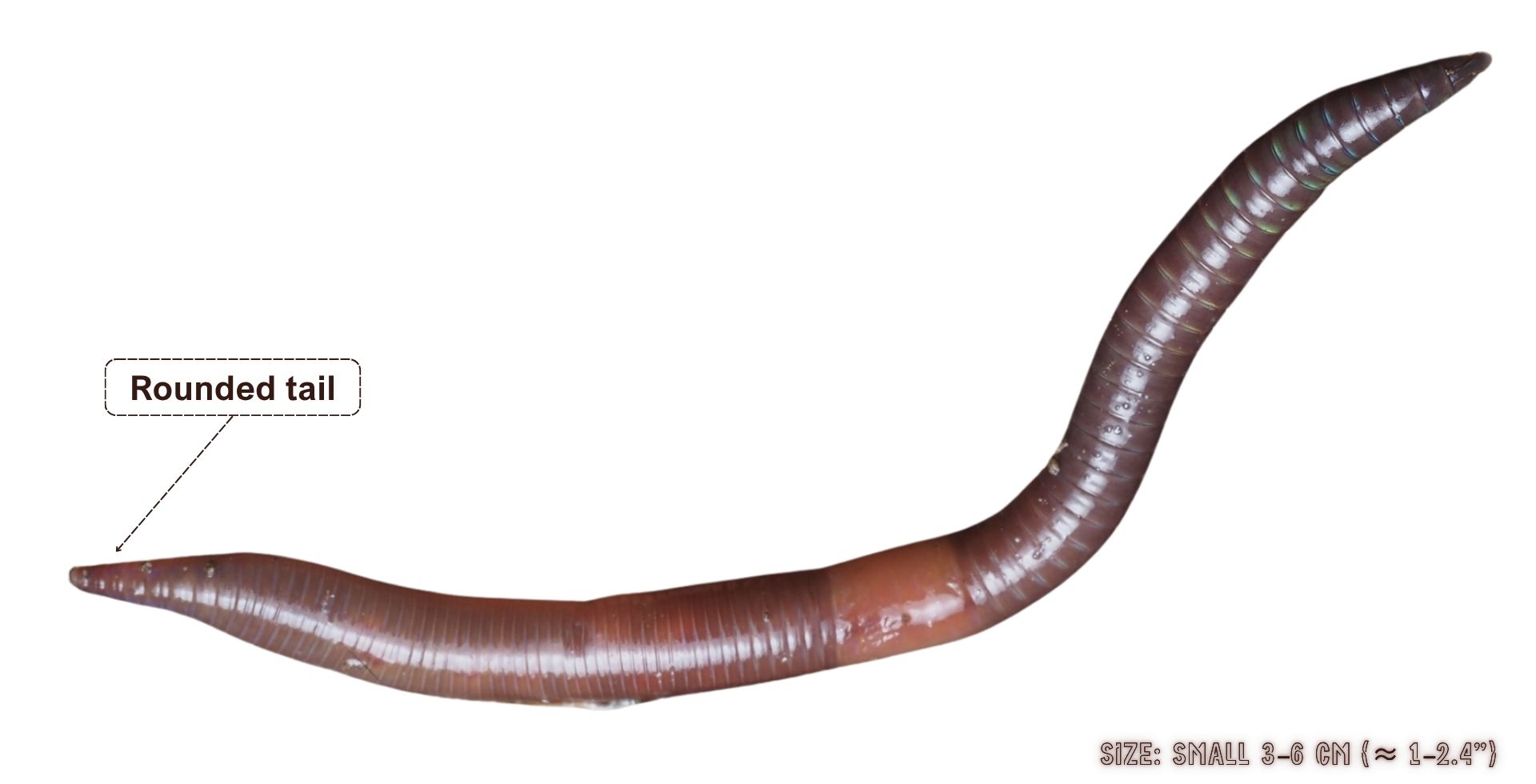
Small + uniform chestnut color
Body size: 3–6 cm (1–2.4")
Color: Uniform chestnut to purple-brown
Tail: Rounded
Male pores: Not visible
Habitat: Litter (epigeic), compost, under logs
Aporrectodea longa (Black-headed worm)
Long, thin + dark head + deep burrower
Body size: 10–17 cm (4–6.7")
Color: Dark head, pale grey/brown body
Shape: Slender, elongated
Male pores: Visible, large
Habitat: Deep vertical burrows (anecic)
Lumbricus terrestris (Nightcrawler)
Large, thick + paddle tail + deep burrow
Body size: 9–30 cm (3.5–12")
Color: Strong gradient (dark head → pale tail)
Shape: Thick, cylindrical (pencil-sized)
Tail: Broad, flattened (paddle-like)
Male pores: Visible, large
Habitat: Deep vertical burrows (anecic), pulls organic matter into burrows
Dendrobaena octaedra (Octagonal-tail worm)
Small + angular tail + cold tolerant
Body size: 2–4 cm (0.8–1.6")
Color: Reddish-violet to dark red
Tail: Angular (octagonal/quadrangular)
Special Feature: A raised whitish gland visible on the underside between the saddle and the head
Male pores: Visible, small
Habitat: Leaf litter (epigeic), moss, under logs, highly cold-tolerant, common in forest litter layers
Dendrodrilus rubidus (Gilt-tail worm)
Other name: Bimastos rubidus
Small + yellow/orange tail
Body size: 2–10 cm (0.8–4")
Color: Reddish-violet to dark red
Tail: Yellow or orange pigmented
Male pores: Visible, small
Habitat: litter-dwelling species (epigeic), organic-rich soils, decaying wood, moss, highly cold-tolerant
Lumbricus rubellus (Red earthworm)
Red head fading to pale tail
Body size: 2.5–15 cm (1–6")
Color: Red anterior fading toward lighter posterior
Tail: Slightly flattened
Male pores: Not visible
Habitat: Litter (epigeic), compost, under logs, common surface-dwelling species in disturbed soils
Lumbricus castaneus (Chestnut worm)
Small + uniform chestnut color
Body size: 3–6 cm (1–2.4")
Color: Uniform chestnut to purple-brown
Tail: Rounded
Male pores: Not visible
Habitat: Litter (epigeic), compost, under logs
Octolasion cyaneum (Woodland blue worm)
Blue-grey body + yellow tail
Body size: 6.5–18 cm (2.6–7")
Color: Blue-grey
Tail: Pale yellow
Clitellum: Light-colored, distinct
Habitat: Moist soil, under stones, logs, near streams (epi-endogeic), often in woodland or moist environments
Octolasion tyrtaeum (Woodland white worm)
Pale body + yellow tail + light clitellum
Body size: 2.5–13 cm
Color: Pale whitish to grey-pink
Tail: Yellow
Clitellum: Reddish-orange to beige
Habitat: Forest soils (endogeic), gardens, debris, moist environments
Reset